
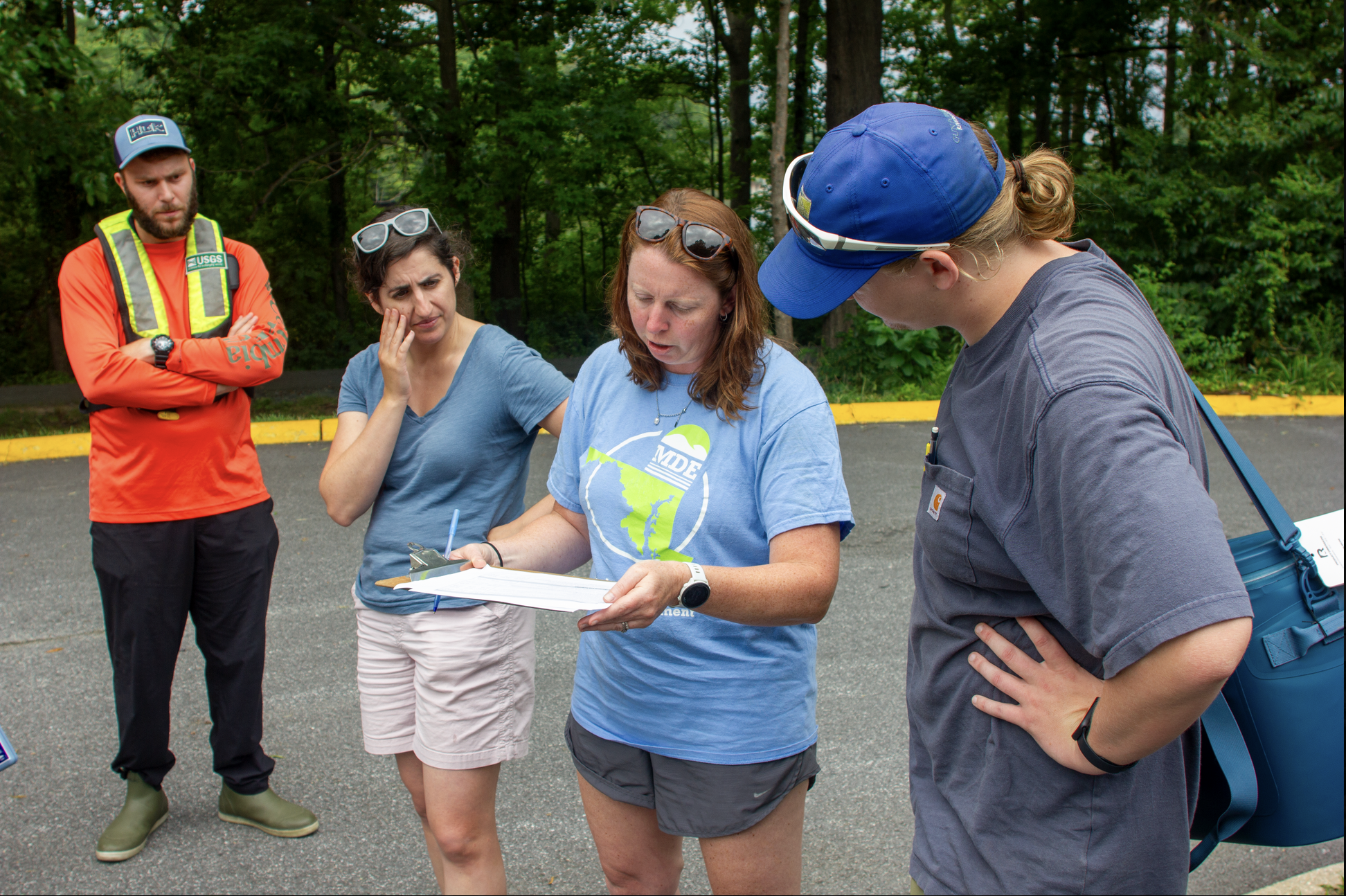
On Tuesday July 21st, Gunpowder RIVERKEEPER® staff: Theaux Le Gardeur, Brady Bayne, and Skidmore College intern Luke Kretschman were joined by Alex Fries of UMCES and Shane Mizelle of USGS at Dundee Creek Marina to complete a field audit. The purpose of this field audit was to ensure that the methods, training, documentation, and quality controls used by Gunpowder RIVERKEEPER® for both our bacterial and tidal water quality monitoring program were rigorous, consistent, and scientifically sound.
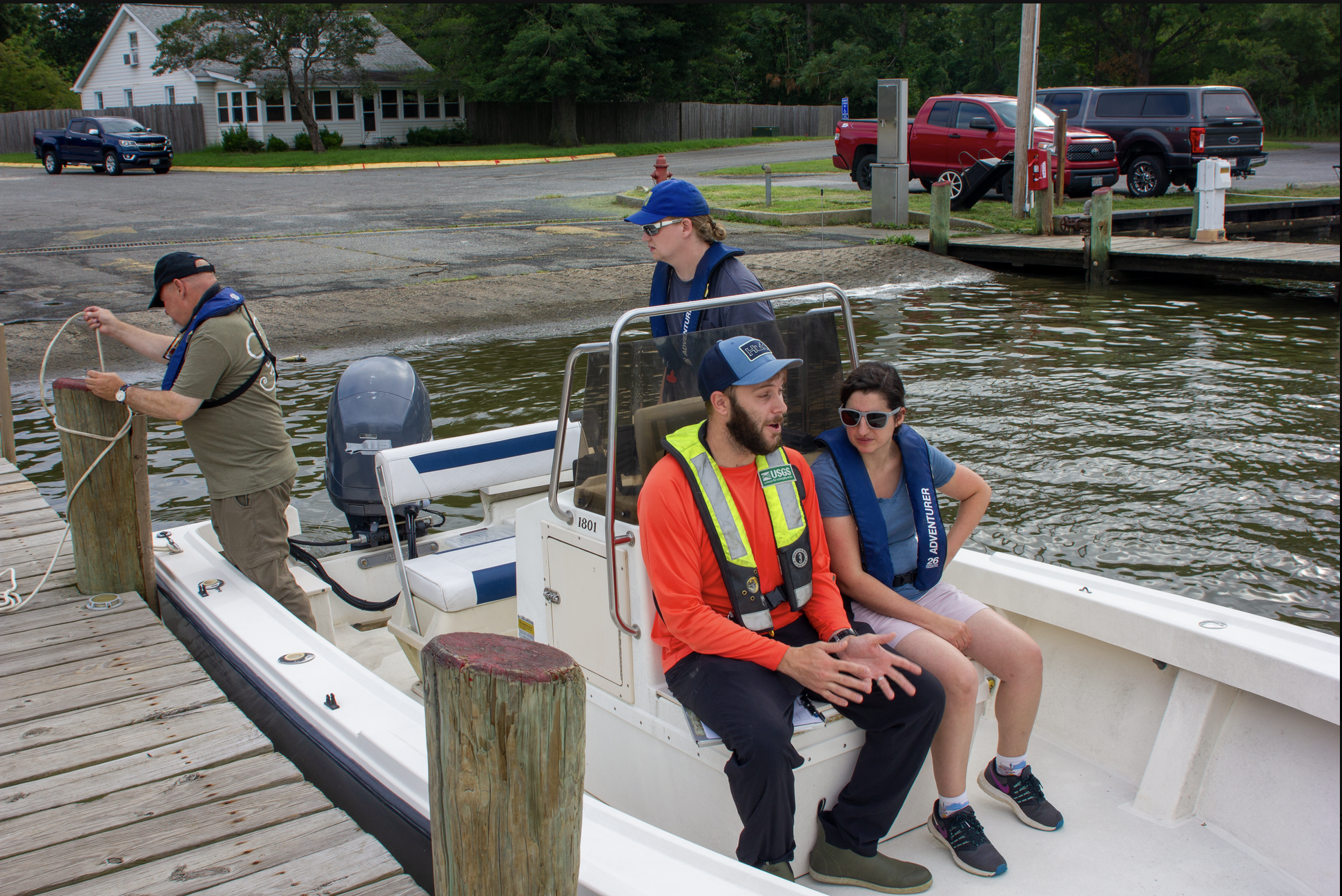
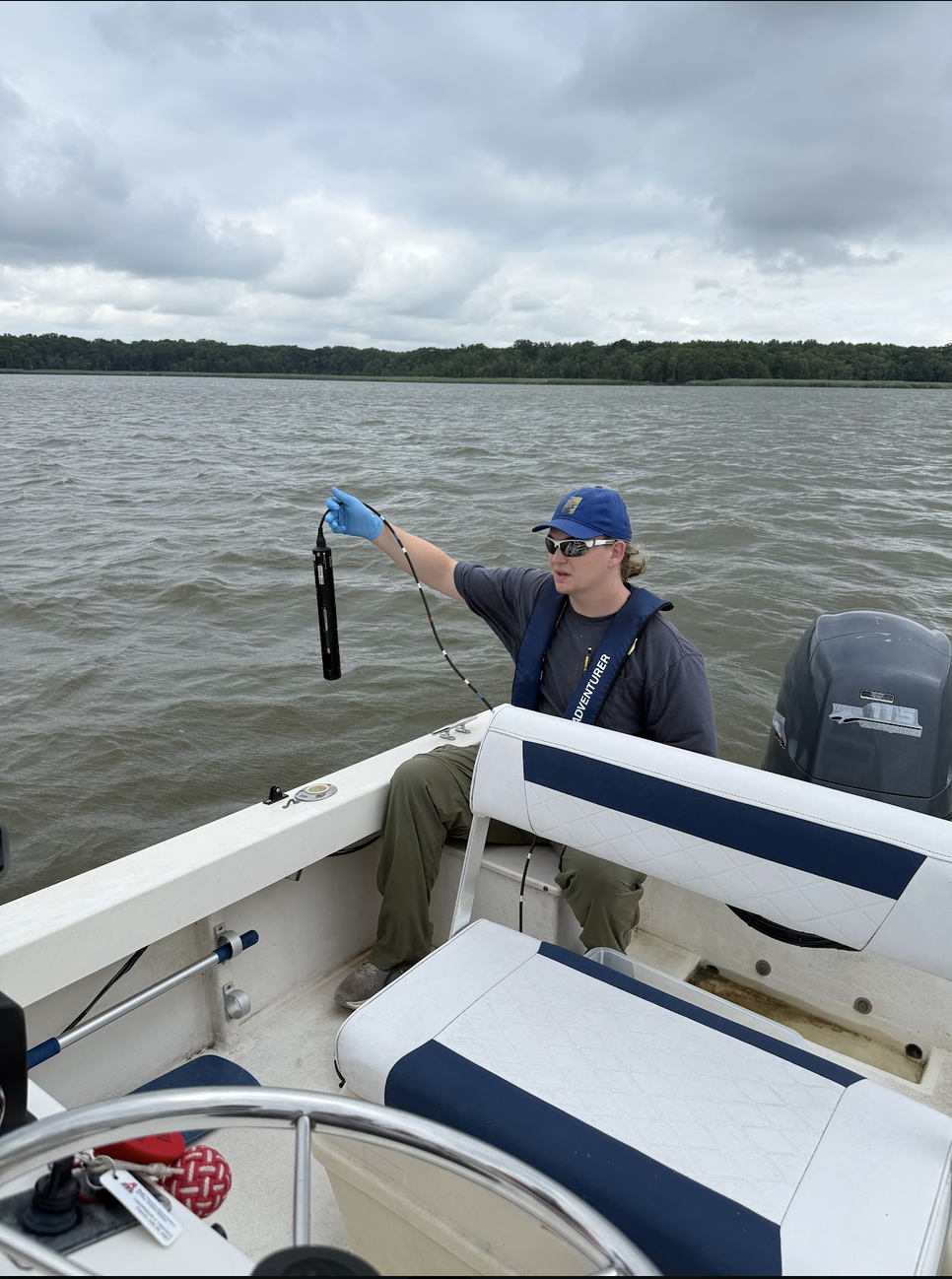
An early morning start at Dundee Creek Marina would kick off the Tidal portion of our audit. It was a windy day out on the water and the clouds loomed overhead but our crew was determined. While navigating choppy waters we departed from the marina and executed our usual protocol of monitoring water quality. Two sites were selected along the Gunpowder River tidal basin for this demonstration where Alexandra and Shane looked on as Theaux and Brady deployed the YSI, a device used to measure water quality parameters, into the water column. After collecting and recording the data at Dundee Creek and Battery Point it was determined that we successfully sampled the water maintaining monitoring quality standards set by the state. We headed back the marina heads held high and preparing for the next portion of the field audit.
After escaping the windy conditions of the Gunpowder River, we packed up our stuff and made our way over to Mariner Point Park for our bacteria monitoring. In the parking lot next to Taylor Creek we met Becky Monahan of Maryland Department of the Environment (MDE) who would be overseeing our monitoring processes and protocols.
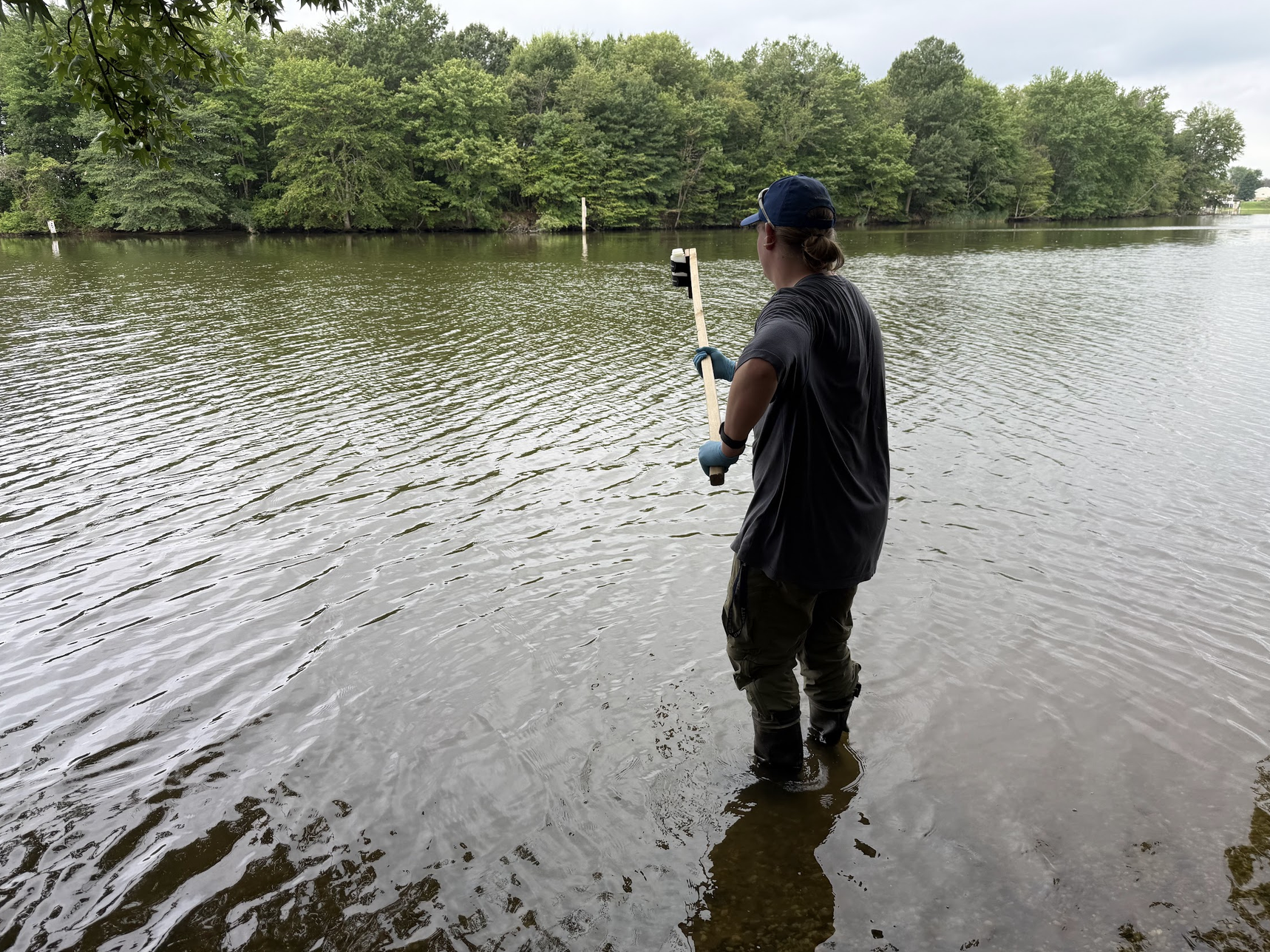
The procedure started in the parking lot where we discuss the general protocol and how we prepare for each day of sampling. The wooden sampling sticks used by Gunpowder RIVERKEEPER® are unique among other groups that test for bacteria thus requiring some more explanation.
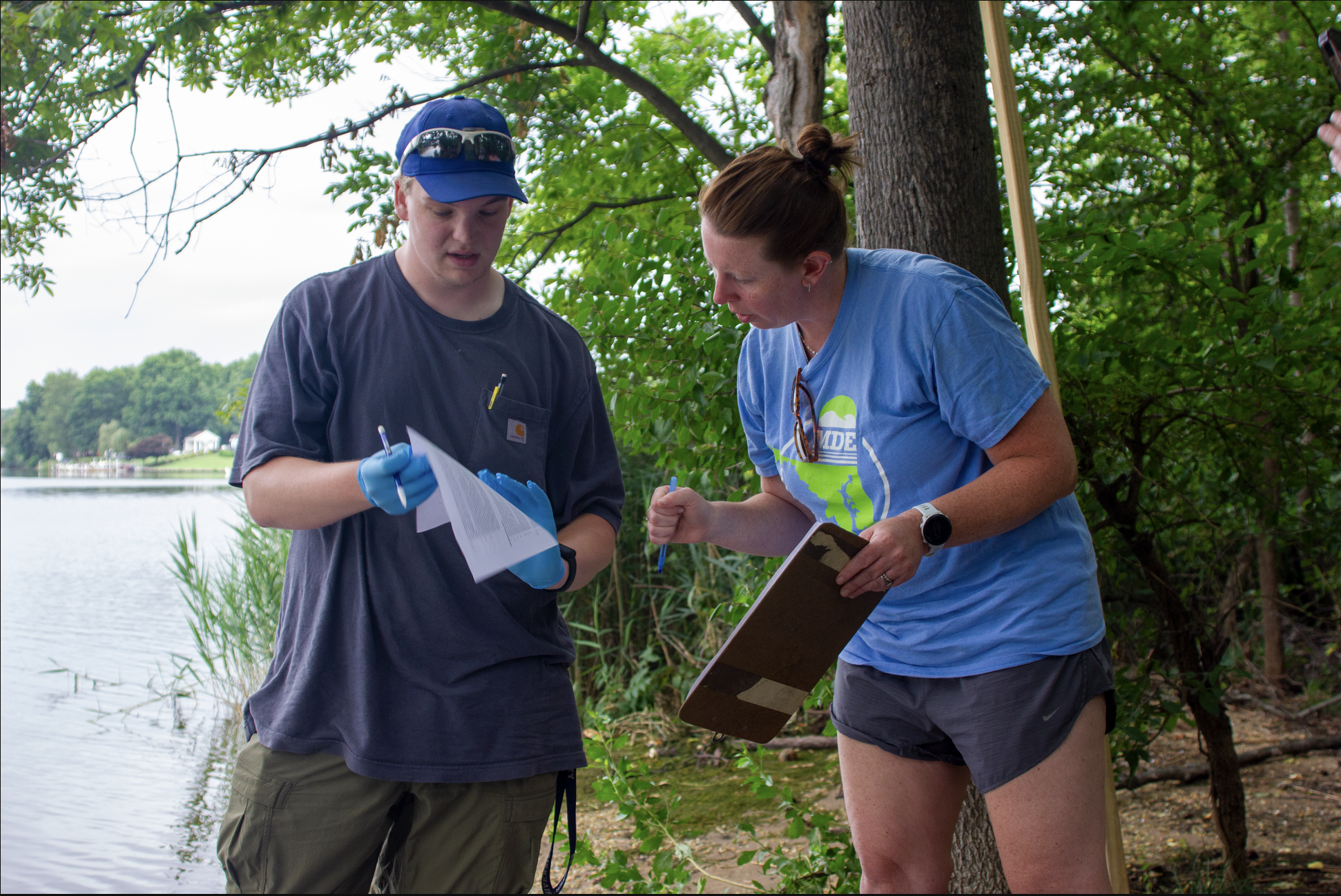
After our preparation is complete we walked down to the shoreline of Taylor Creek where Brady provided a demonstration of collecting and transporting a bacteria sample using the wooden sampling pole and sterile sampling bottles. Here ideas were exchanged on how to make the process more streamlined and cost-efficient to ensure the sustainability of the bacteria monitoring program. After our sample was stashed in our cooler it was time to head back to the lab at Sparks Bank Nature Center to demonstrate how we process our samples.
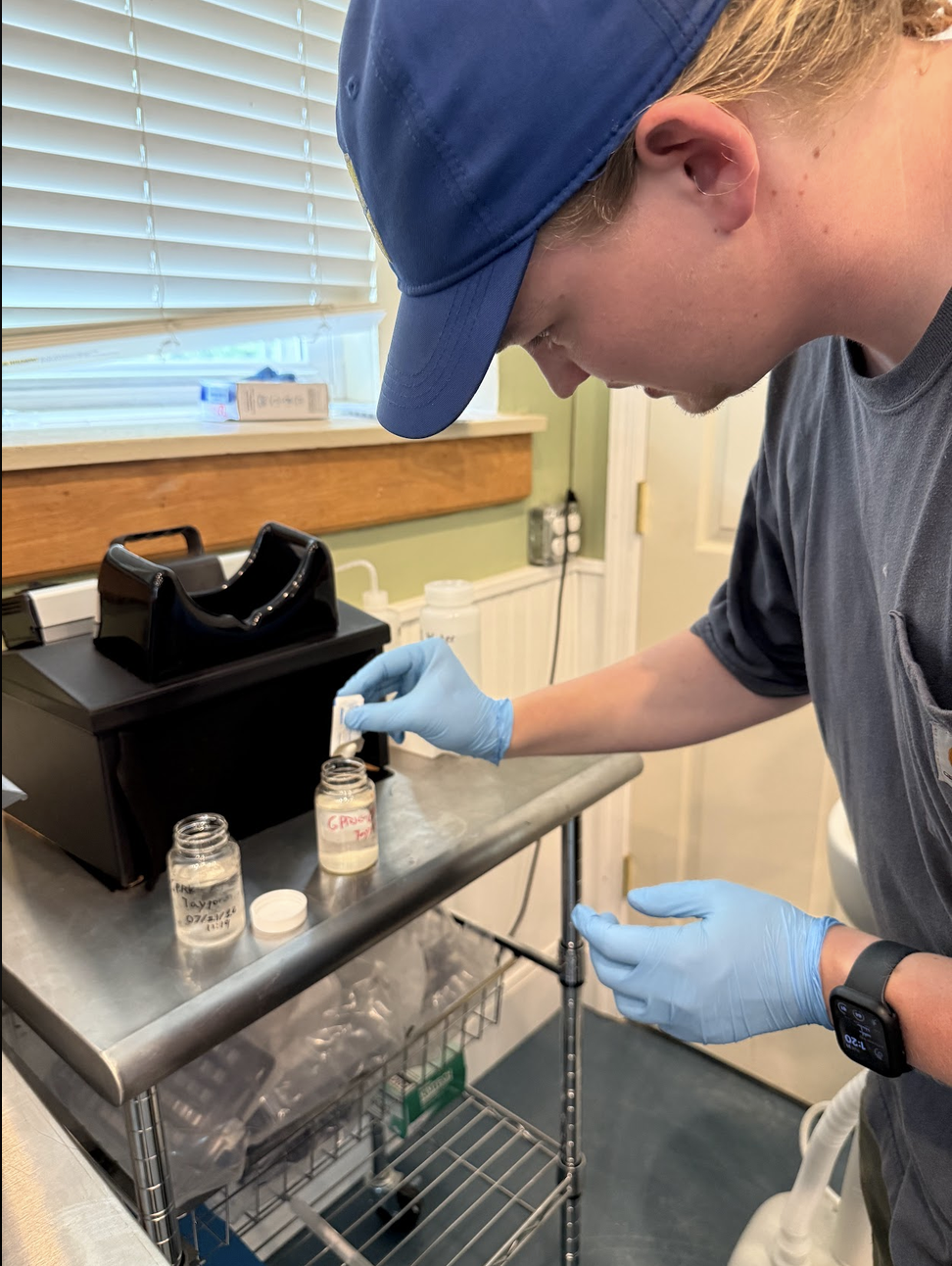
After make the journey from Joppatowne to Sparks it was once again up to Brady to demonstrate how we process the samples using the IDEXX Method, a Colilert reagent, and a 1:10 dilution. After successfully sealing our sample and placing it in the incubator it was deemed we had met all the requirements to be approved as a Tier III bacteria monitoring organization.
Now that our QAPP has been approved, our lab proficiency has been tested, and our fieldwork has been audited, Gunpowder RIVERKEEPER® is thrilled to announce that our water quality monitoring is officially designated as tier-three: our data can now be used to inform state decision making. A process that began in October of 2025 has now concluded and thanks to the hard work of Gunpowder RIVERKEEPER® staff and the support of the CMC, Gunpowder RIVERKEEPER® is thrilled to share this news with you.
Thanks again to Alex Fries of University of Maryland Center for Environmental Science, Becky Monahan from Maryland Department of the Environment, Shane Mizelle from United States Geological Survey, and everyone at Chesapeake Monitoring Cooperative who helped us out during our designation process.