
Gunpowder RIVERKEEPER®’s Theaux Le Gardeur submitted comments to the U.S. Environmental Protection Agency during the comment period on the Proposed Rule: “Updating the Water Quality Certification Regulations” which would affect Section 401 of the Clean Water Act. This section allows states such as Maryland to uphold stricter water quality standards than federal regulations.

From the letter:
Dear Administrator Zeldin,
On behalf of Gunpowder RIVERKEEPER®, I urge the EPA to withdraw its proposed revisions to Section 401 of the Clean Water Act that would limit the ability of states and Tribal governments to protect water quality.
As a Waterkeeper organization working daily to safeguard the Gunpowder, we see firsthand how federally permitted projects can threaten drinking water, fisheries, and public health if proper safeguards are not in place.
Water quality certifications make certain that state water quality standards which are stricter than federal standards, hold projects to a higher environmental standard so these large-scale infrastructure impacts by maintaining natural stream functions. Weakening these protections now will make aquatic species less able to survive future environmental changes.
The Proposed Rule would subvert Section 401’s authority for energy infrastructure projects and would also allow activities and projects that generally require Section 401 certifications to be built without proper and lawful scoping.
To provide a localized example, in our work, to protect the Gunpowder River from increased deleterious water quality impacts from large scale infrastructure projects, we identified 39 of 70 waterways impacted by the Columbia Gas Transmission Line-MB … which were designated as cold water, drinking water supply waters (USE III-P and IV-P) supporting native (eastern Brook Trout) and wild (naturalized) brown trout. Our appeal was used to inform the court that the state had not provided adequate monitoring in a related wetlands and waterways permit that was issued a 401 certification to assure that the project would comply with the Clean Water Act and state water laws.
If approved in its current form, the Proposed Rule will create immediate and irreparable harm to the Gunpowder RIVERKEEPER®’s organizational and supporter’s interests in protecting water quality and sensitive species.
Thanks to Mr. Le Gardeur and everyone else who submitted comments during the public comment period to help protect our state and nation’s waterways.
The letter is reproduced below in its entirety:
February 17, 2026
Submission via www.regulations.gov
Lee Zeldin, Administrator
U.S. Environmental Protection Agency
1200 Pennsylvania Avenue, N.W.
Washington, DC 20460
Re: Environmental Protection Agency, Proposed Rule: “Updating the Water Quality Certification Regulations,” 91 Fed. Reg. 2008 (Jan. 15, 2026) Docket ID No. EPA-HQ-OW-2025-2929.
Dear Administrator Zeldin,
On behalf of Gunpowder RIVERKEEPER®, I urge the EPA to withdraw its proposed revisions to Section 401 of the Clean Water Act that would limit the ability of states and Tribal governments to protect water quality.
As a Waterkeeper organization working daily to safeguard the Gunpowder, we see firsthand how federally permitted projects can threaten drinking water, fisheries, and public health if proper safeguards are not in place.
Gunpowder Riverkeeper is a nonprofit environmental and public health membership organization charged with protecting, conserving, and restoring the Gunpowder, Little Gunpowder, Bird, Bush and Middle River watersheds. Gunpowder Riverkeeper has 502 members who reside, work, and recreate in the Gunpowder, Little Gunpowder, Bush, Bird and Middle River watersheds and have aesthetic, environmental, commercial, and property interests related to the water quality and sensitive species that live within these watersheds.
Aquatic species in Baltimore, Carroll, Harford Counties, Maryland and York and Adams Counties, Pennsylvania already face cumulative threats from urban runoff, road salt, fertilizers, sewage overflows, and climate-driven flooding. Climate change increases water temperatures and storm intensity, which further stress fish and turtle populations.
Water quality certifications make certain that state water quality standards which are stricter than federal standards, hold projects to a higher environmental standard so these large-scale infrastructure impacts by maintaining natural stream functions. Weakening these protections now will make aquatic species less able to survive future environmental changes.
Several imperiled aquatic species found in Maryland would be harmed if 401 protections are weakened:
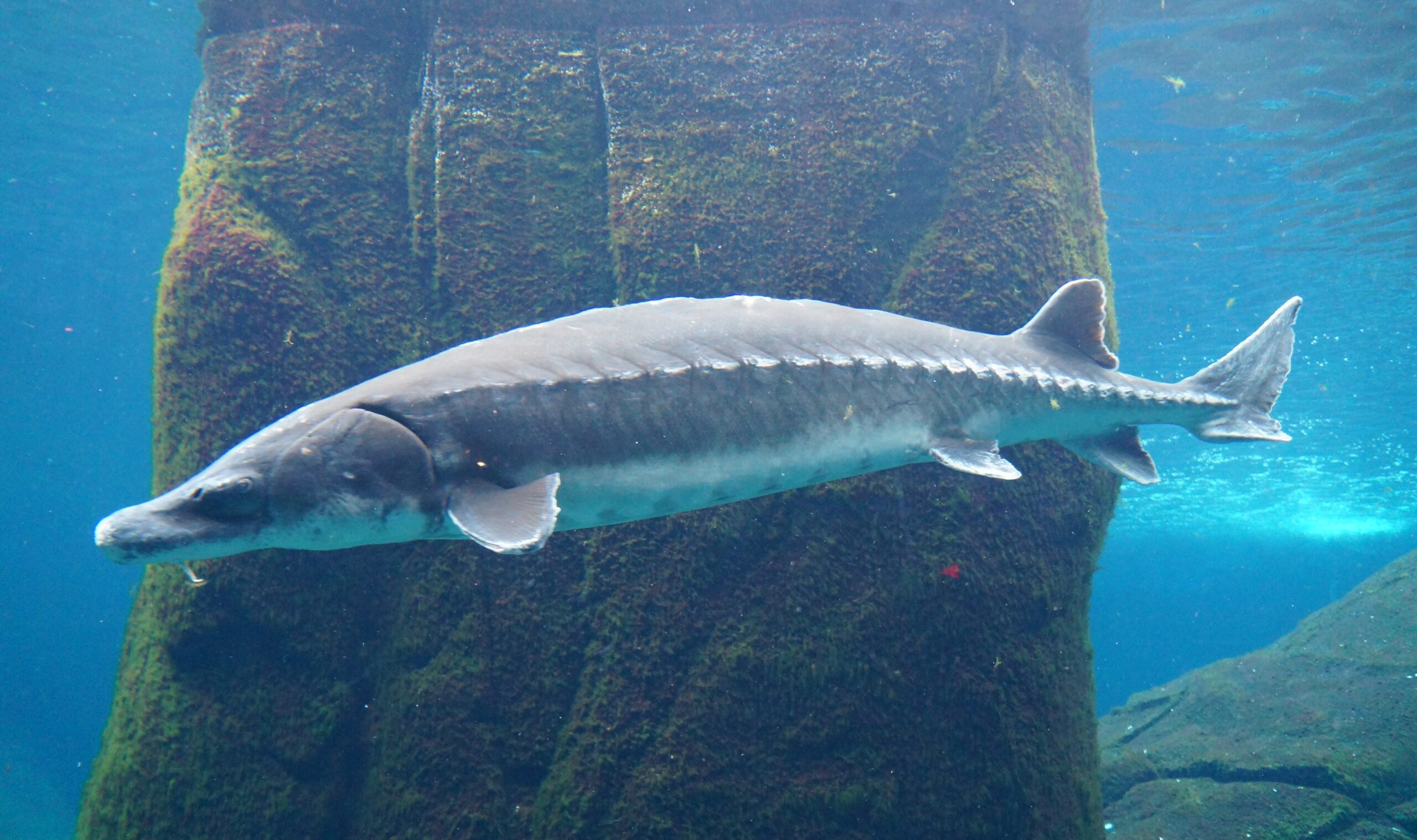
Endangered Fish Species: Fish such as the Atlantic Sturgeon and the State endangered Chesapeake Log Perch and the State threatened Eastern Brook Trout depend on fresh waters with good water quality. Increased runoff, stormwater discharge, and stream modification caused by development threaten their survival. Currently, 401 Water Quality Certification help limit these activities in sensitive areas.
Amphibians and Aquatic Reptiles: Species like the Bog turtle, which depends on clean wetlands and slow-moving waters, are especially vulnerable. Wetlands in Baltimore, Carroll, Harford Counties, Maryland and York and Adams Counties, Pennsylvania serve as breeding and feeding grounds. The Proposed Rule makes it easier for wetlands to be drained or degraded, removing essential life support systems for these animals.
Section 401 embodies cooperative federalism and ensures that local expertise and community voices are not overridden by federal permitting decisions. Weakening this authority would disproportionately harm frontline and underserved communities and make it harder to prevent pollution before it occurs.
The Proposed Rule undermines decades of effective clean water protections and prioritizes industry convenience over the public interest. I urge EPA to reject this proposal and fully uphold Section 401 as Congress intended as the Proposed Rule would harm public health, water quality, and wildlife, and would constitute arbitrary and capricious agency action, an abuse of discretion, and otherwise be unlawful.
It would exceed EPA’s statutory authority, would violate the plain, unambiguous meaning of the Federal Clean Water Act (“CWA”), the Administrative Procedure Act (“APA”) and the Endangered Species Act (“ESA”), and would be inconsistent with decades of Supreme Court and myriad other judicial precedents. The Proposed Rule would irresponsibly and dangerously impede the ability of States, Tribes, the public, and even of other Federal agencies and EPA itself, to protect waters and ecosystems and people who rely on, use and enjoy them across the country. EPA must withdraw, and must never finalize, the Proposed Rule.
The Proposed Rule would allow subvert Section 401 authority for energy infrastructure projects and would also allow activities and projects that generally require Section 401 certifications to be built without proper and lawful scoping including; Federal licensing agencies, include without limitation: ● Interstate gas pipelines – FERC, Army Corps ● Hydroelectric dams/facilities – FERC ● Other dams and diversions (water storage and supply, etc.) – Department of the Interior, Army Corps, Fish and Wildlife Service ● Nuclear power plant licensing/relicensing – Nuclear Regulatory Commission ● Bridge/highway construction – Federal Highway Administration, Army Corps ● CWA discharges of pollutants – All NPDES permits (POTWs, power plants, industrial discharges, etc. – EPA (in non-NPDES-delegated regulated mining projects – SMCRA, Army Corps
To provide a localized example, in our work, to protect the Gunpowder River from increased deleterious water quality impacts from large scale infrastructure projects, we identified 39 of 70 waterways impacted by the Columbia Gas Transmission Line-MB, ( a 26” diameter, 21.1 mile long Interstate Natural Gas Transmission line from Owings Mills to Rutledge, MD impacting 305.4 acres of land and 70 waterways with a temporary 75 to 100 foot wide construction right-of-way (ROW) resulting in a permanent 50 foot ROW across the Gunpowder Watershed in Baltimore and Harford counties, Maryland) were designated as cold water, drinking water supply waters (USE III-P and IV-P) supporting native (eastern Brook Trout) and wild (naturalized) brown trout. Our appeal was used to inform the court that the state had not provided adequate monitoring in a related wetlands and waterways permit that was issued a 401 certification to assure that the project would comply with the Clean Water Act and state water laws. Importantly, a simple majority of the streams impacted were neither disclosed by the Maryland Department of the Environment (MDE) nor the U.S. Army Corps of Engineers in the joint public notice and only one route of up to six potential routes was made public. The environmental impacts we were concerned about, namely; increases in water temp from conversion of forest to grass in the right of way (ROW), loss in Dissolved Oxygen, and increases in sediment from open-ditch trenching in all but one of the 70 waterway crossings were some of the water quality concerns as and potential impacts downstream to the 1.5 million Baltimore-Metro area residents that use the Gunpowder for daily drinking water needs. The local court halted and required the agency to re-notice the project as even though a 401 was required and issued, it was issued by MDE with no meaningful monitoring provision to assure that the project complied with state and federal water quality standards
If approved in its current form, the Proposed Rule will create immediate and irreparable harm to the Gunpowder Riverkeeper’s organizational and supporter’s interests in protecting water quality and sensitive species.
Respectfully submitted,
Theaux M. Le Gardeur
/S/ Theaux M. Le Gardeur
Executive Director and RIVERKEEPER®
Gunpowder RIVERKEEPER®
1207 Sparks Road
Sparks-Glencoe, Maryland 21152
gunpowderriverkeeper@gmail.com