
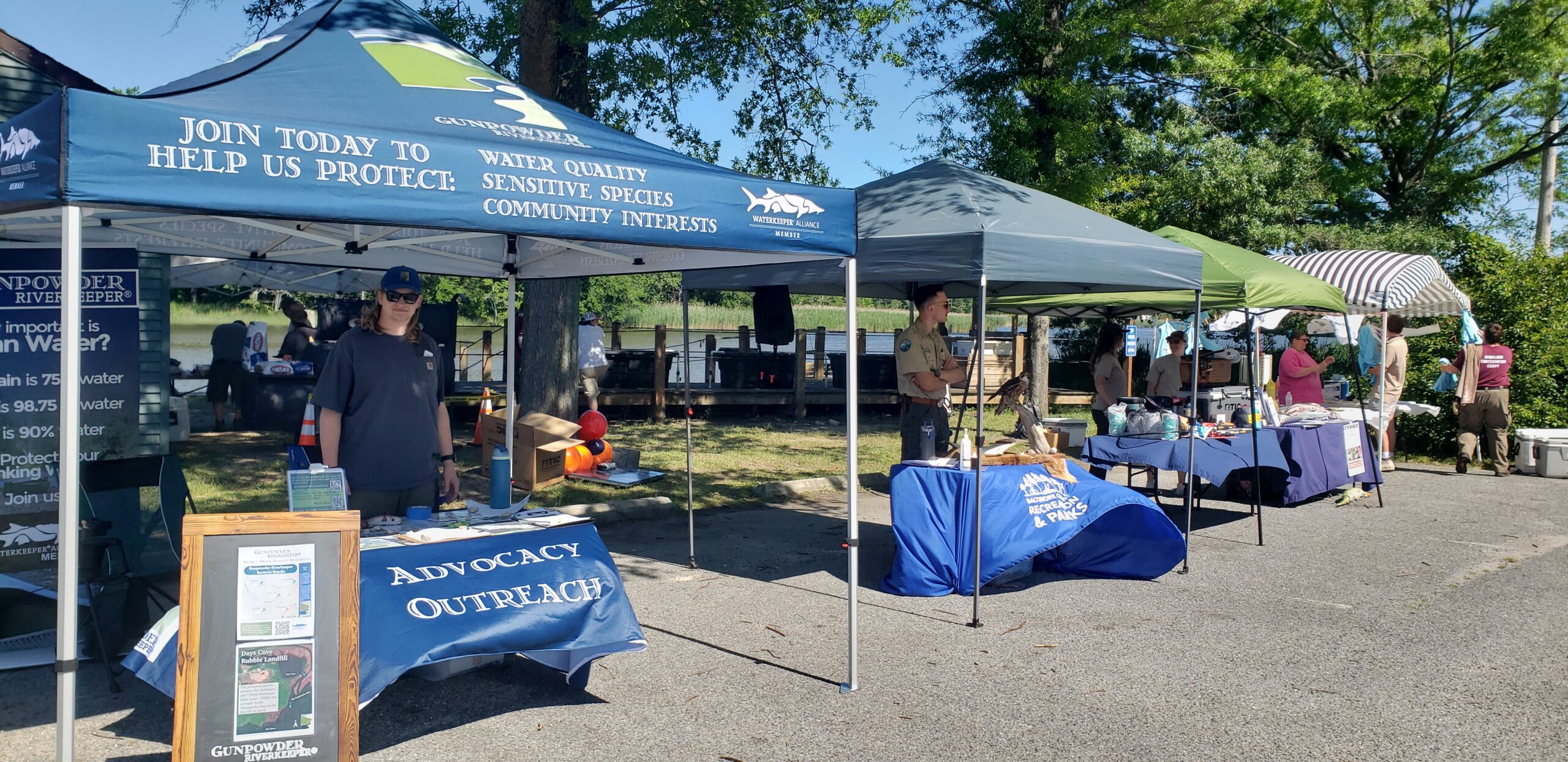
Saturday June 13the Gunpowder RIVERKEEPER® staff Brady Bayne and Joe Ottomano got an early start at Dundee Creek Marina to set up our information and outreach table for the Snakes on the Dundee V fishing derby and tournament.
We joined an array of presenters from DNR, Parks and Rec, US Fish and Wildlife, and a commercial bowfishing crew to share information about catching, cleaning, and eating the invasive Northern Snakehead (Chesapeake Channa) as well as the opportunities available for education at Marshy Point Nature Center.
Tournament fishers set out as early as five am to go track down the biggest snakehead or invasive catfish. Boaters and anglers filtered in throughout the morning to slip their boats into the water or trek out to a quiet piece of creek to get to work.
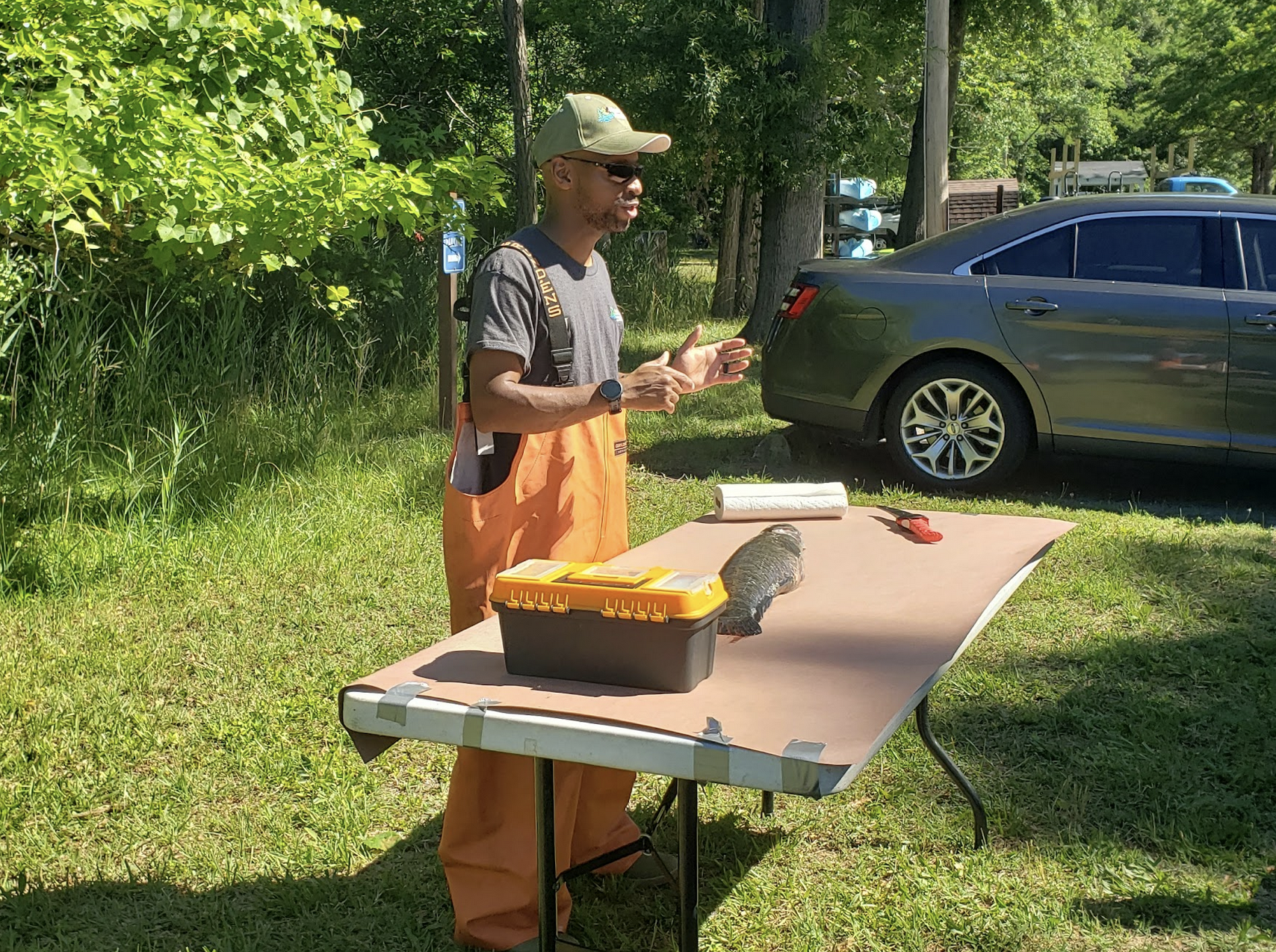
Maryland Department of Natural Resources had sourced several Northern Snakehead specimens from the Conowingo Dam fish elevator on the Susquehanna River for the purpose of demonstrating how to make fish prints, how to fillet these delicious fish, and for the purposes of grilling and eating said delicious fish fillets. Snakehead nuggets were on the menu in three different flavors, blackened, Old Bay, and lemon pepper. Normally, invasive fish are pulled from these elevators and donated to local food pantries, but today they did their part for outreach and education.
Since it was also a free-fishing day in Maryland, Go Fish Maryland had their trailer and tent set up with equipment for anglers to practice with and borrow. Excited youngsters got to practice casting a rod at target fish before tackling the live ones in the creek. From their website:
Go Fish Maryland is a statewide fishing education program led by the Freshwater Fisheries staff of the Maryland Department of Natural Resources. Through education, engagement, and partnership, Go Fish Maryland aims to build lifelong anglers while fostering conservation-minded connections to Maryland’s natural resources.
Visitors also had the opportunity to buy a Space Invaders-themed invasive species t-shirt, which they could adorn with prints of fish they’d caught, fish from the demonstration cooler, or faux-fish which came with decidedly less slime.
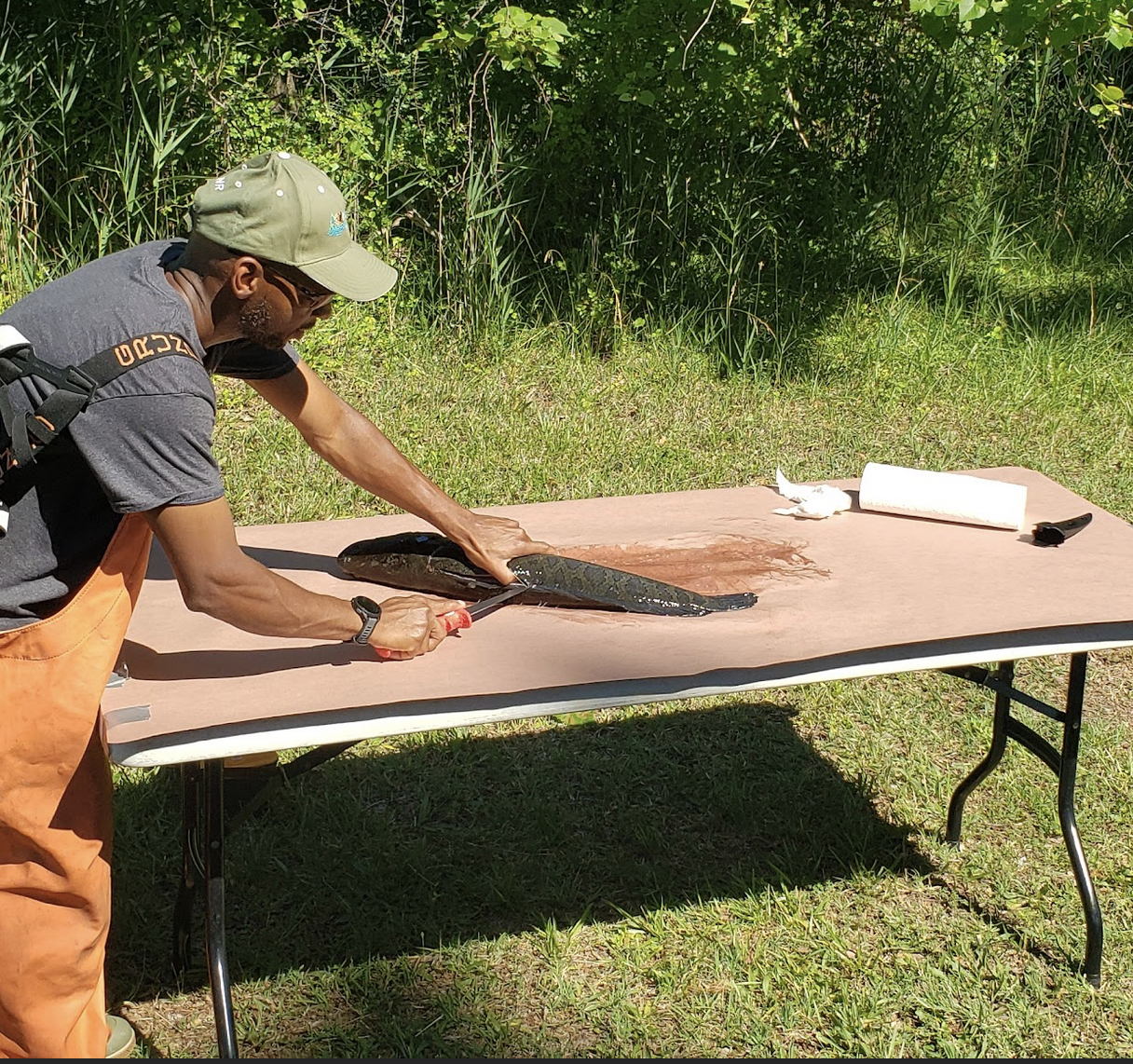
Throughout the day, DNR Invasive Fishes Program Manager Branson Williams gave demonstrations of how to prepare the fish for cooking and engaged participants in questions and answers about the fish. Southern Maryland Bowfishing was on site to take participants out on their bowfishing boat for talks about the nature of fishing with a crossbow. According to recent data from the Maryland Fishing Report, over 80% of the take for Snakeheads in the state is from bowfishing or bowjigging.
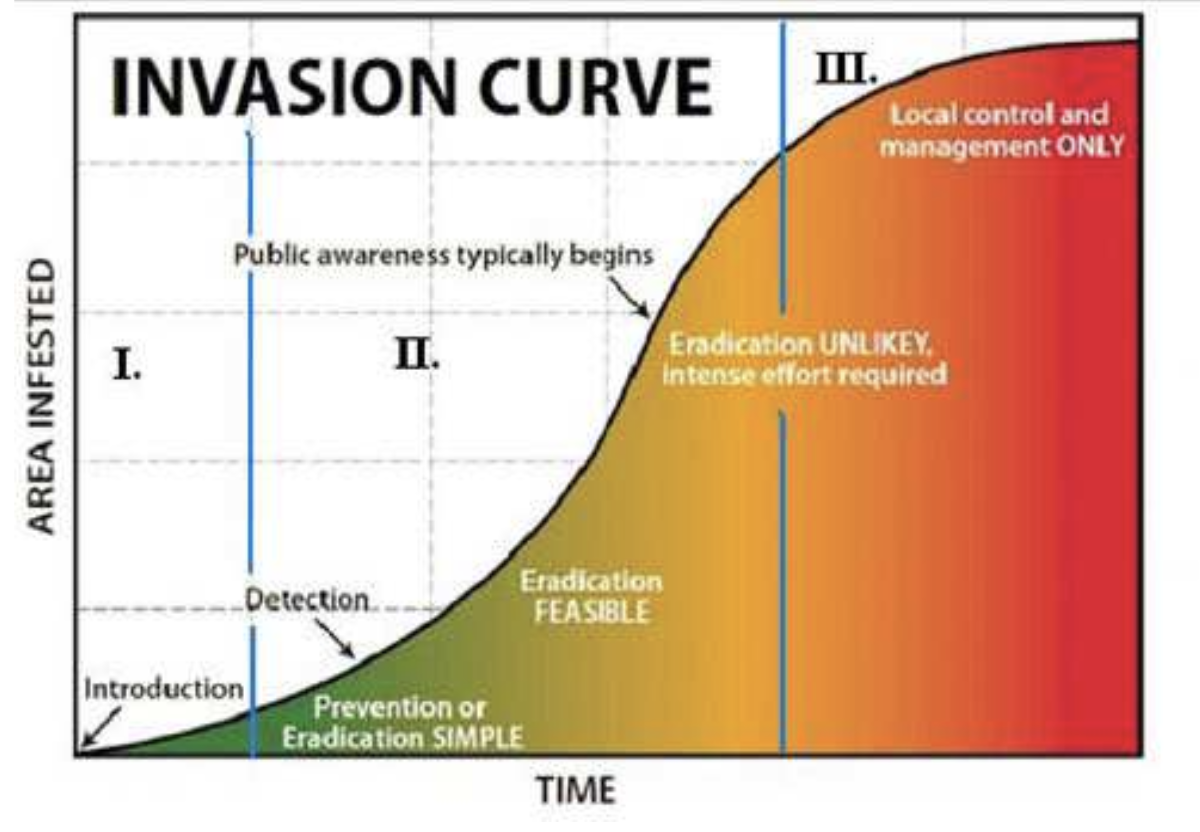
According to Branson, Northern Snakeheads are solidly in Stage 3 of the Invasion Curve. This means that the populations are established and hard to remove, but can be managed in isolated waters. The state’s goal is to remove 25% of the biomass of these fish yearly to prevent further growth. Recreational anglers are currently removing nearly 22% so there is still room for improvement. Branson noted that anglers are the best way to remove these fish as they are resistant to electrofishing: the fish do not stun for long, and they float face-down due to the placement of their air bladders. This makes netting a stunned fish trickier than for other species.
In addition, the fish are extremely fecund, or prolific breeders. Snakeheads can breed up to twice a year and spawn up to a hundred thousand eggs each spawn. The male and female then guard their young as well, an uncommon trait in fish but one that makes these invasive predators even harder to contain.
Though Gunpowder RIVERKEEPER® staff had to depart before they were awarded, DNR had a table full of prizes for tournament winners and door prizes for participants. Winners had their choice of fishing gear, outdoor equipment, and apparel.
Thanks to everyone who helped to organize this exciting day and to those who stopped by to talk with Gunpowder RIVERKEEPER® about our monitoring programs, volunteer opportunities, and fish. Check back on our website or follow us on social media for the latest details about our tidal and bacterial water quality monitoring programs and updates on our outreach and advocacy projects.
Until then, go buy some invasive fish from your local grocer to help encourage the removal of these invasive species from our state’s waters.