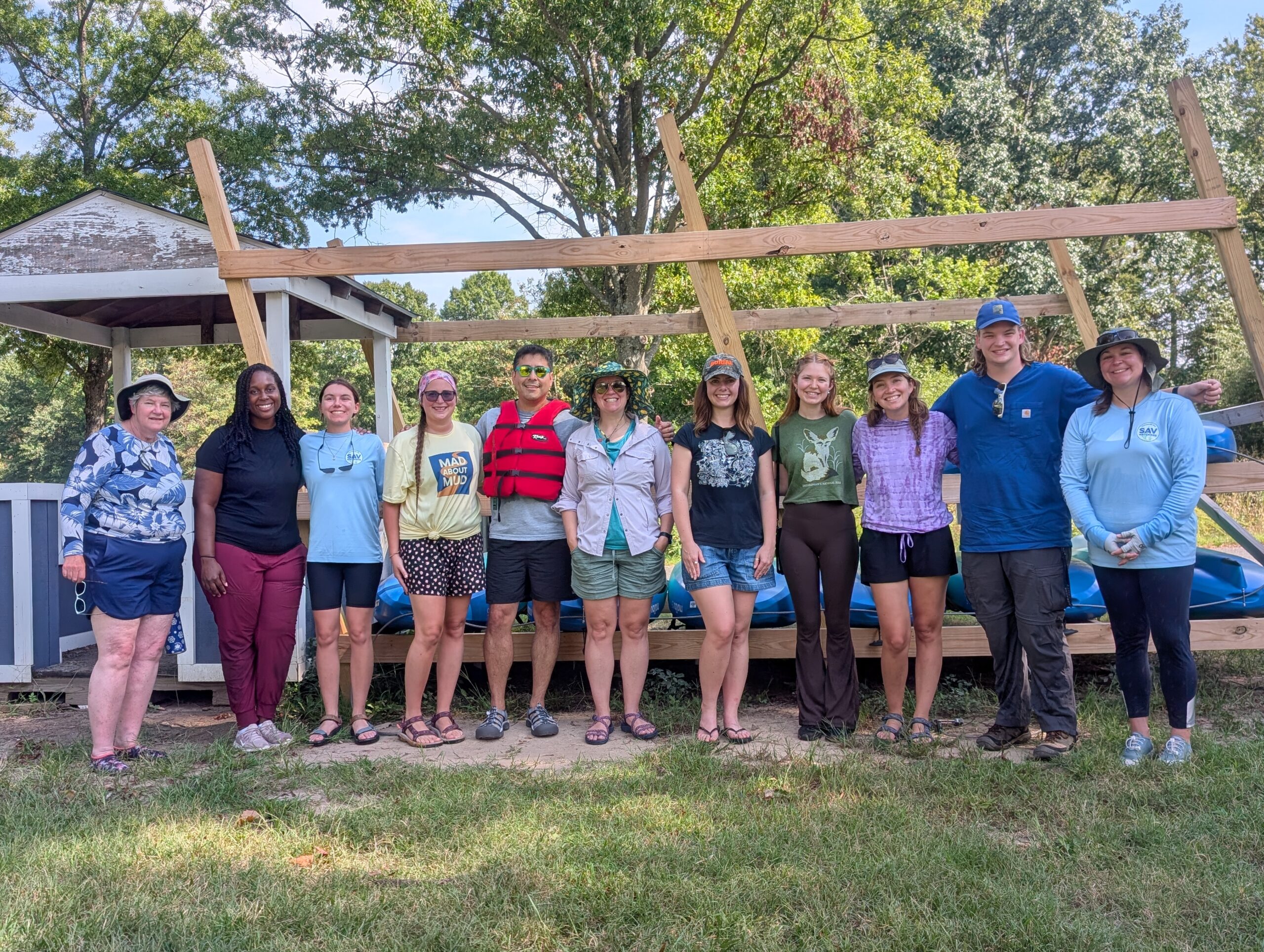
On Saturday September 19th, 2026 Gunpowder RIVERKEEPER® ‘s Theaux Le Gardeur and Department of Service and Civic Innovation 2nd Year Leader, Brady Bayne, met with Kaitlin Scowen, Erika Koontz, and Erin Tomassoni from the Maryland Department of Natural Resources (MDNR) and the Chesapeake Bay SAV Watchers program to begin a day of a submerged aquatic vegetation (SAV) training day for volunteers at Gunpowder State Park Hammerman area in Middle River Maryland.
Submerged Aquatic Vegetation refers to vascular flowering plants that grow in salty, brackish, and fresh waters around the world. SAV found in the bay are more well known as bay grasses. These underwater ecosystems are crucial for the health of the Chesapeake Bay and provide invaluable habitat to crabs, fish, and other commercially important underwater species. Bay grass beds also provide other key ecosystem services such as carbon storage, nutrient cycling, preventing shoreline erosion, and stabilizing sediment.
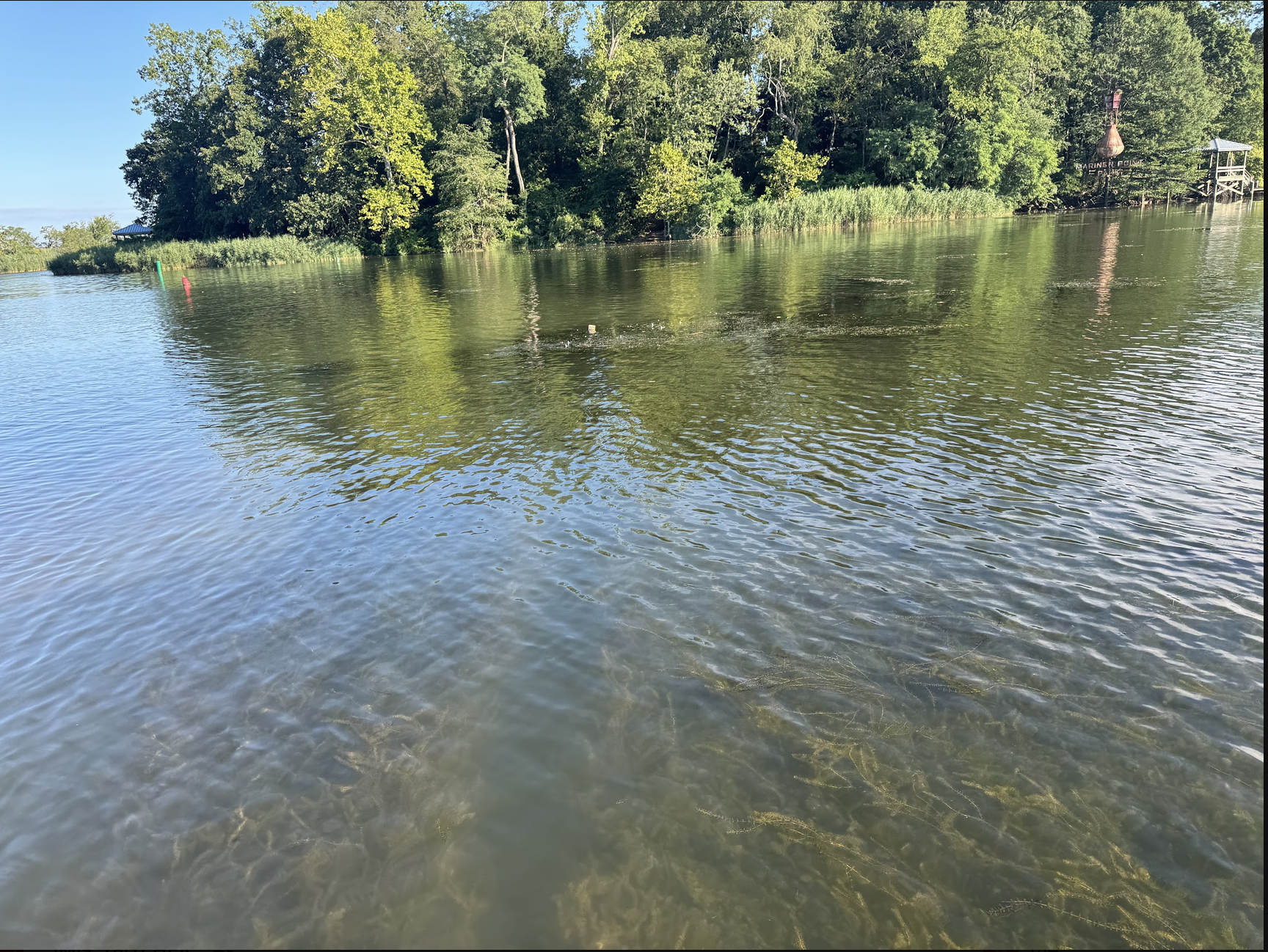
The program was developed by the Chesapeake Bay Program and is coordinated by the Bay Program’s SAV Workgroup and MDNR. Chesapeake Bay SAV Watchers is a part of a three-tiered SAV monitoring system that tracks and studies one of the Chesapeake Bay’s most important natural resources. The Chesapeake Bay SAV Watchers program is in the second tier of SAV monitoring where MDNR scientists host training events and certify volunteers as SAV Watchers Trainers such as Gunpowder RIVERKEEPER® staff. Trainers are then allowed to work with their volunteers to collect information about SAV throughout the Bay. Volunteers venture onto the Chesapeake Bay and its connecting rivers by kayak or small boats to make observations about Bay grasses and learn about Bay health and SAV stewardship all while collecting valuable data for Bay scientists and resource managers. This data is used to ground-truth Tier 1 SAV maps created by aerial imaging in partnership with Virginia Institute of Marine Science (VIMS), make informed restoration decisions, and communicate Bay trends to the public. To learn more about the three-tiered SAV Monitoring program visit the MDNR website.
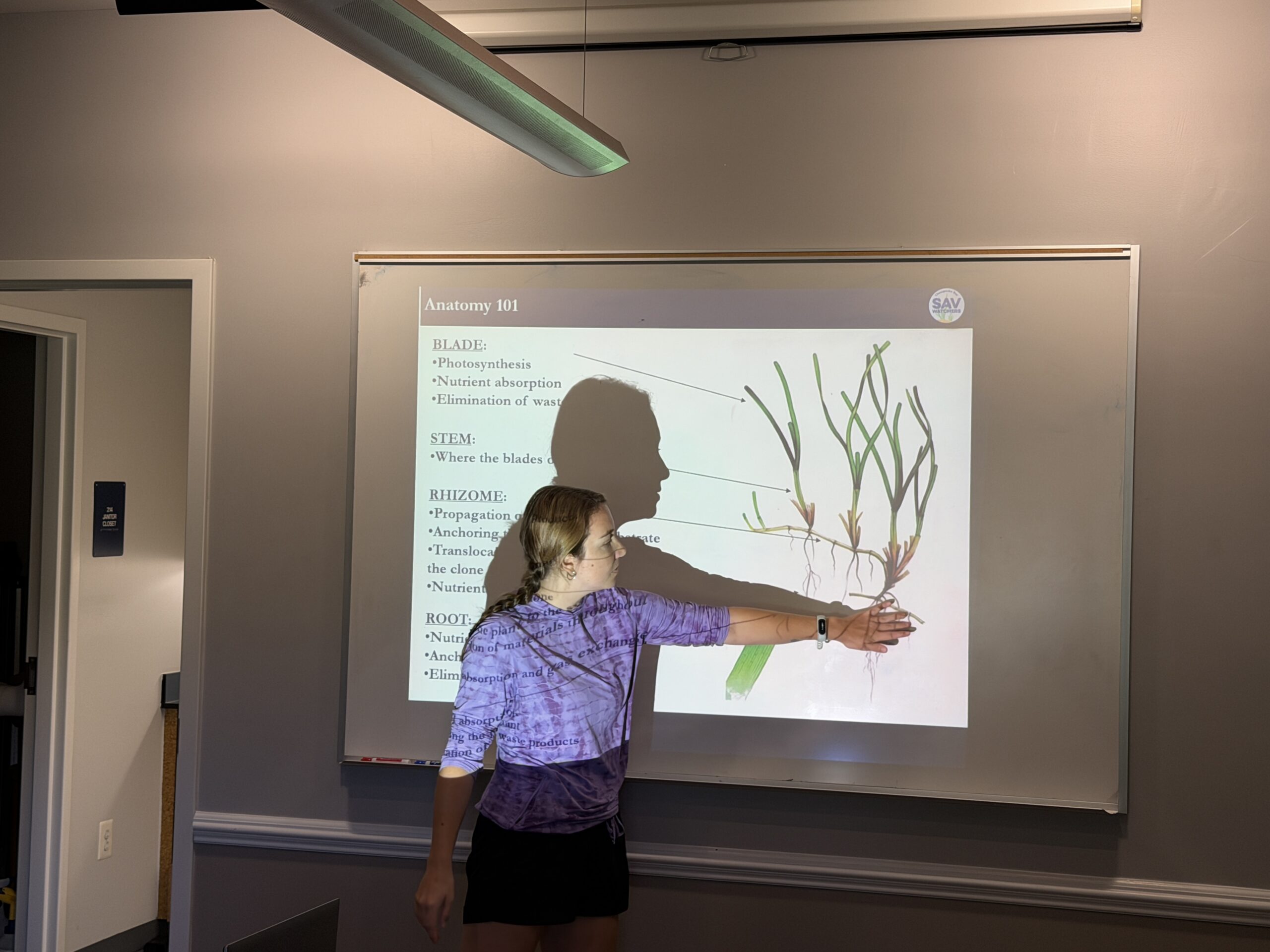
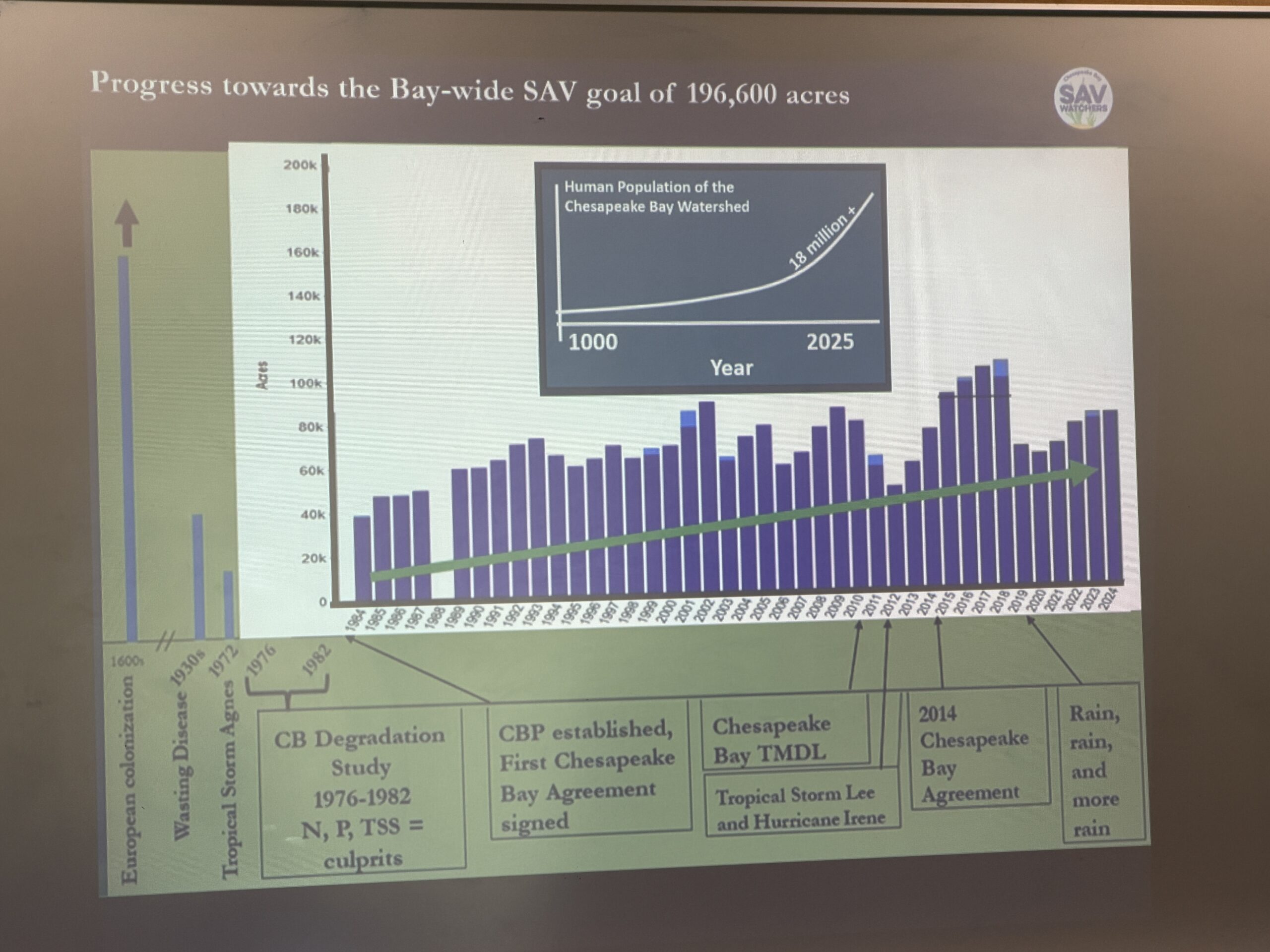
The first section of the training event is a classroom session where volunteers are given important information on the SAV Watchers program and why SAV is critical for the long term health of the Chesapeake Bay. Kaitlin Scowen provided important information on the trends we are seeing relating to the abundance and species of SAV found throughout the bay. Erika Koontz provided a deep dive on how to identify different SAV species and their key characteristics to look for, while Brady Bayne gave volunteers a better understanding of the monitoring and safety protocols used when out looking for SAV.
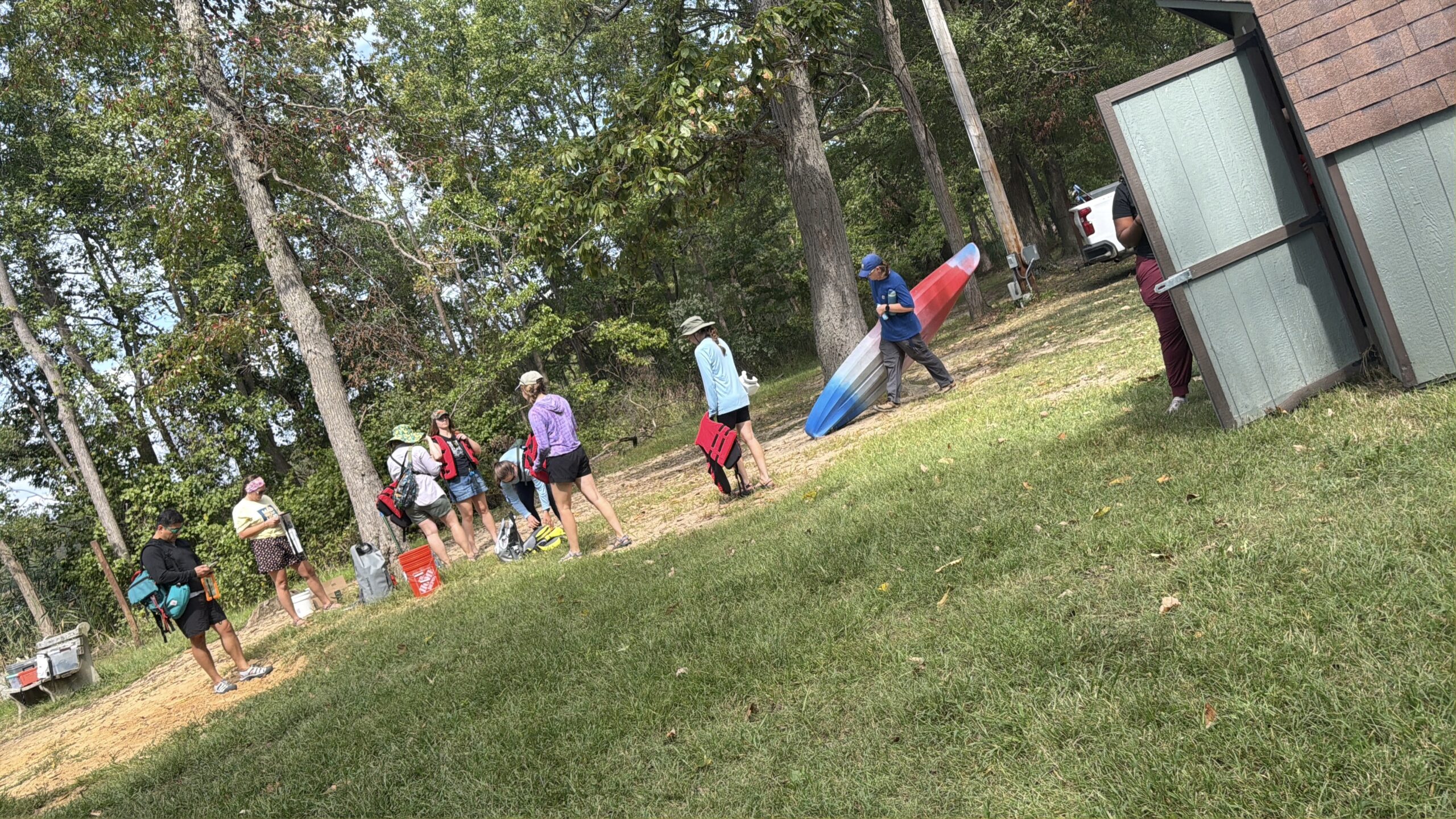
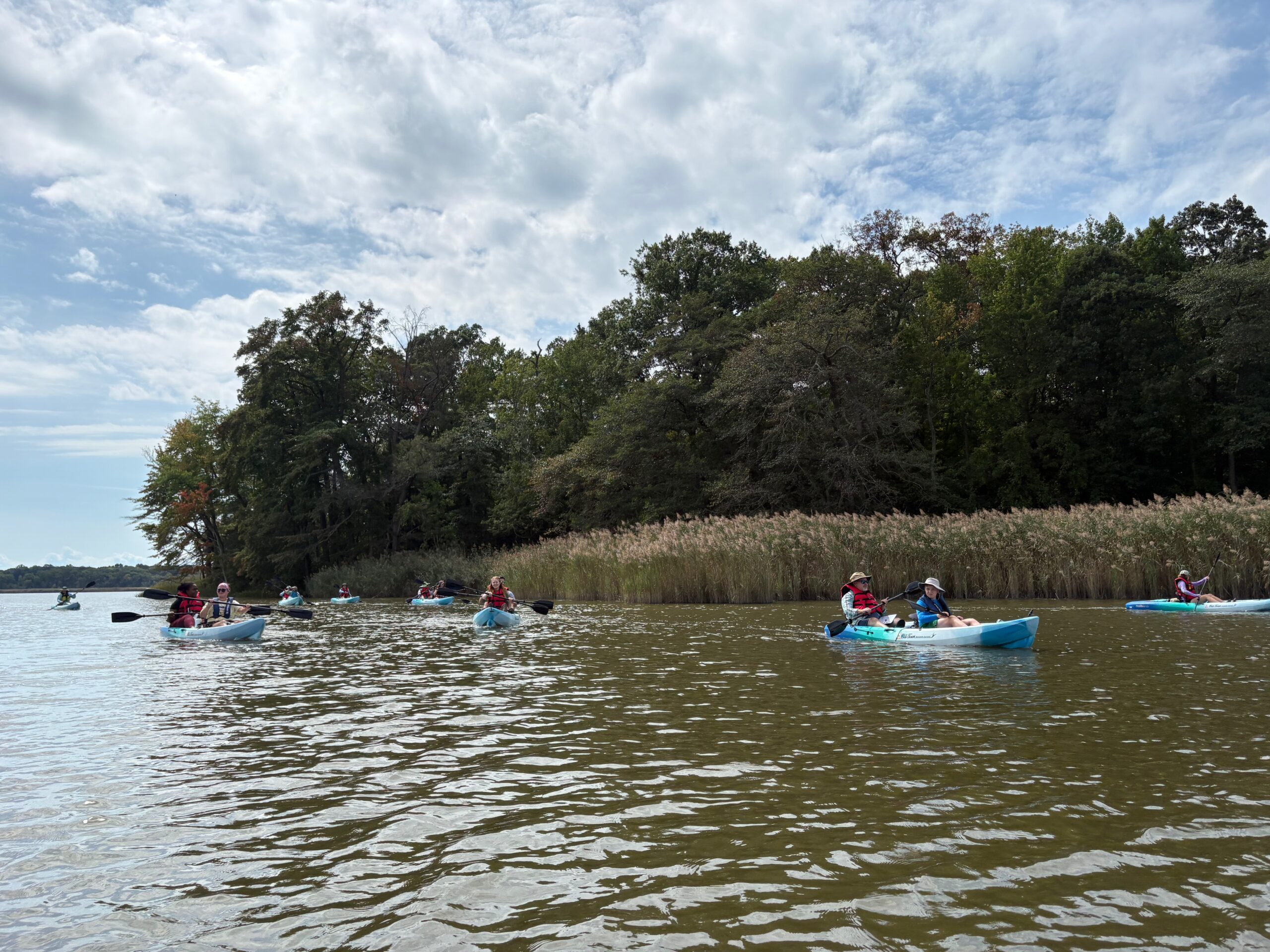
After a quick break for lunch it was time to leave the classroom at Hammerman behind and head over to Dundee Creek Marina to get out on the water and put all the information we just learned into practice. With help from Maryland State Park (MPS) staff, we loaded 8 volunteers into kayaks and canoes and hit the water armed with data sheets and tiny rakes (back scratchers) as our hunt for SAV began.
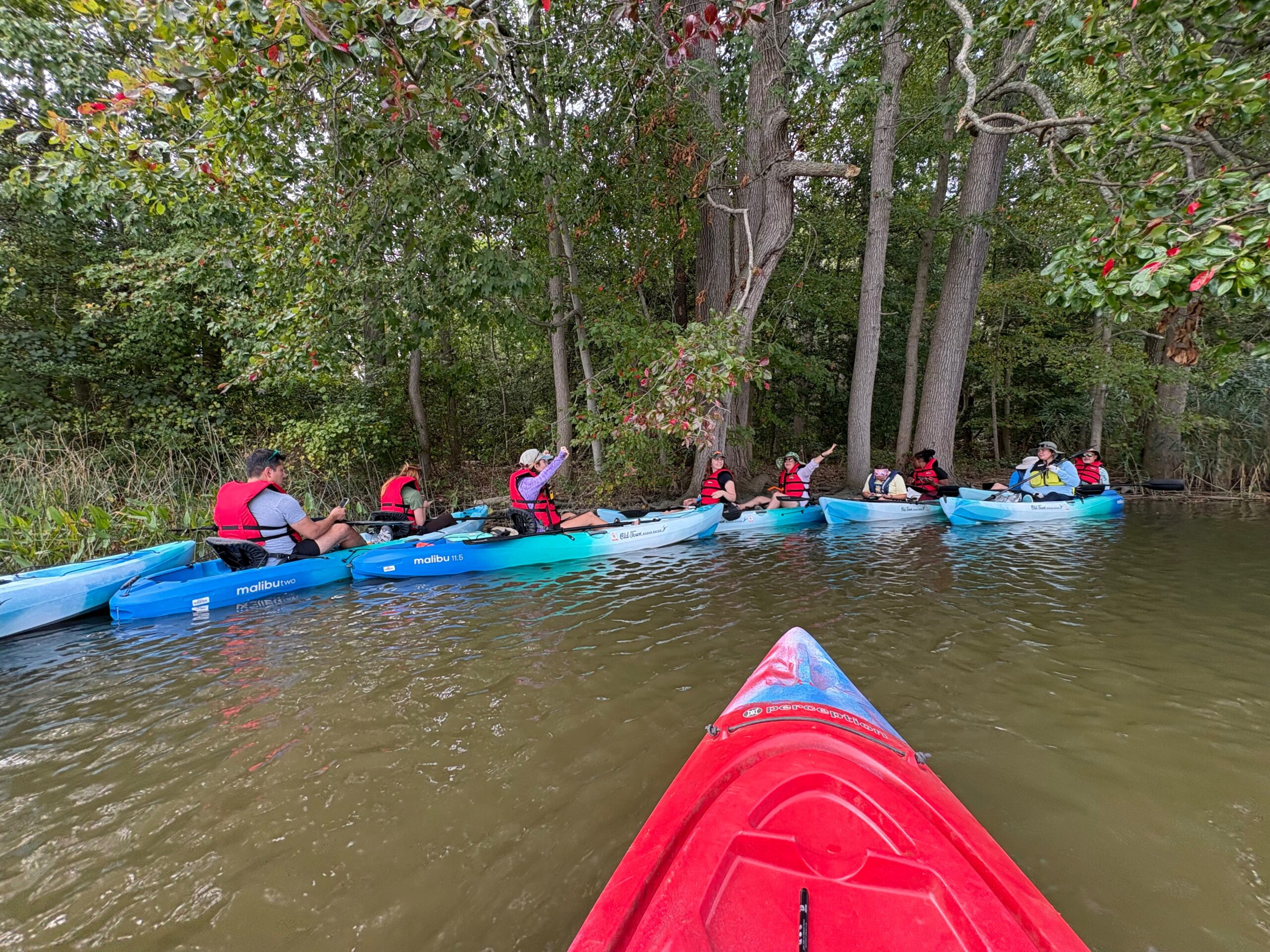
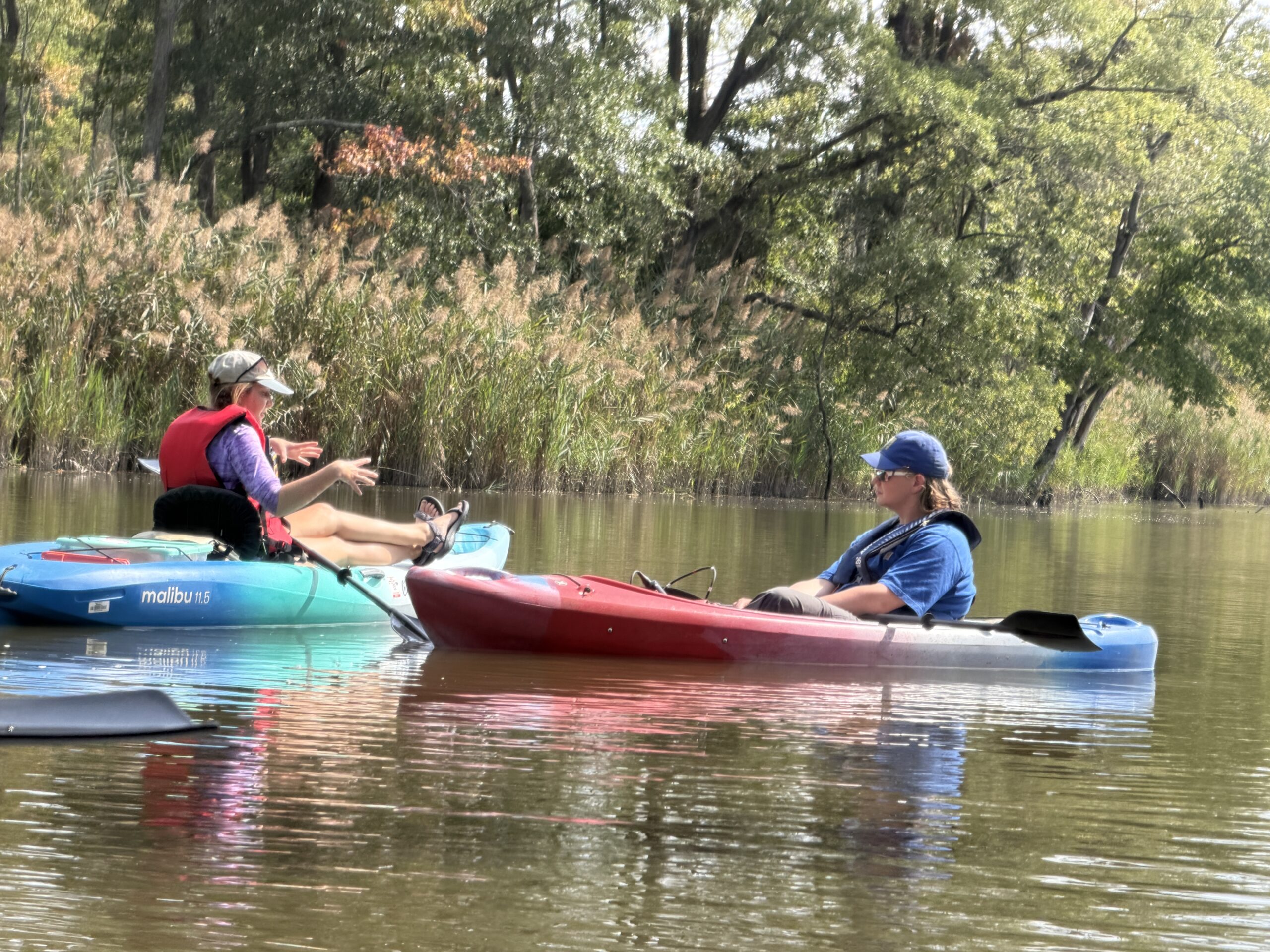
While out on the water, Kaitlin pulled the group together near the creek bank and demonstrated to the group how to successfully complete the monitoring procedure and upload the data to Survey123. Allowing real time data that we collect to be used to help understand SAV populations in the Gunpowder River. First, we noted important observations of the environment that surrounded us such as shoreline type, shoreline erosion, and Human Debris (litter, oil, plastics, etc.) all which can help explain the presence or absence of SAV nearby.
Next we used a secchi disk to measure water clarity and depth. We lowered our black and white disks into the water column until it was just barely visible giving us a better understanding of how much light is penetrating the water at a given time. As SAV requires light to photosynthesize just like terrestrial plants, sunlight and water clarity play a crucial role in the survival of SAV.
It was finally time to pull out the tiny rakes and start searching for SAV. As the plants were pulled from the creek they were passed from kayak to kayak as volunteers took turns trying to identify what was in their hand. We paddled from spot to spot up and down the creek practicing how to identify and document the SAV species that were found.
As the sun blazed overhead we paddled back to the shore to conclude our SAV training with a group picture. We would like to thank Kaitlin Scowen, Erika Koontz, and Erin Tomassoni from the Department of Natural Resources and the Chesapeake Bay Watcher Program for their assistance with this event. We would also like to thank all of our amazing volunteers who joined us. If you are interested in volunteering with Gunpowder RIVERKEEPER® at an event like this please use the volunteer registration page.