
On two Saturdays in October Gunpowder RIVERKEEPER® staff Brady Bayne and Joe Ottomano led groups of volunteers to monitor water quality at two locations in the Gunpowder watershed using the Izaak Walton League of America’s Virginia Save Our Streams (VSOS) Macroinvertebrate stream monitoring protocol.
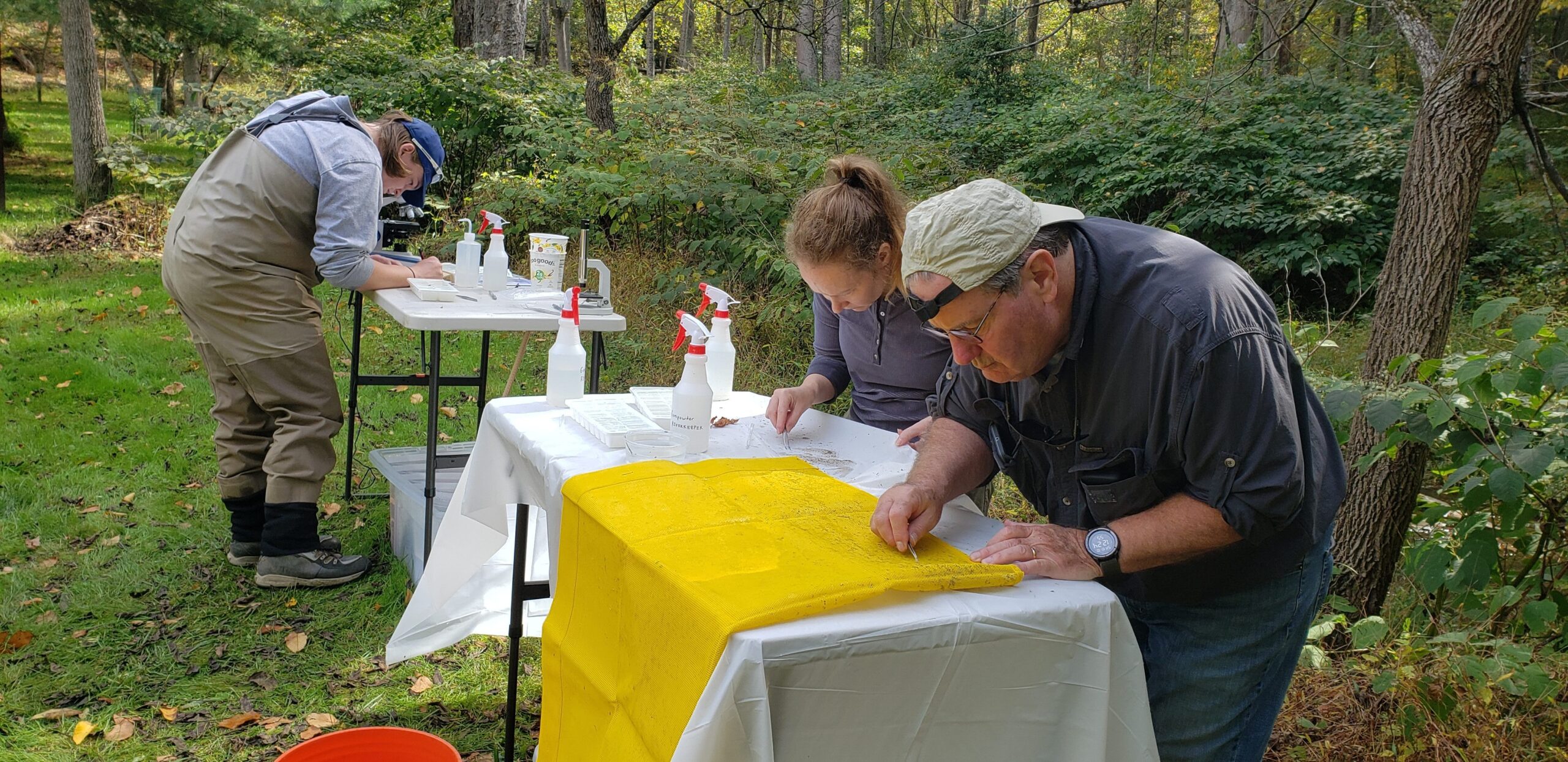
Our first monitoring station was located at Big Gunpowder Falls and Masemore Road where we monitored the Big Falls tributary Bush Cabin Run. There we met five volunteers including frequent bacteria and tidal monitoring volunteers Mike Kohler and Bekah Dobry. We were also joined by homeschooler Wes and his parents, who were eager to make real connections between his science curriculum, the Save Our Streams Protocol, and the local environment.
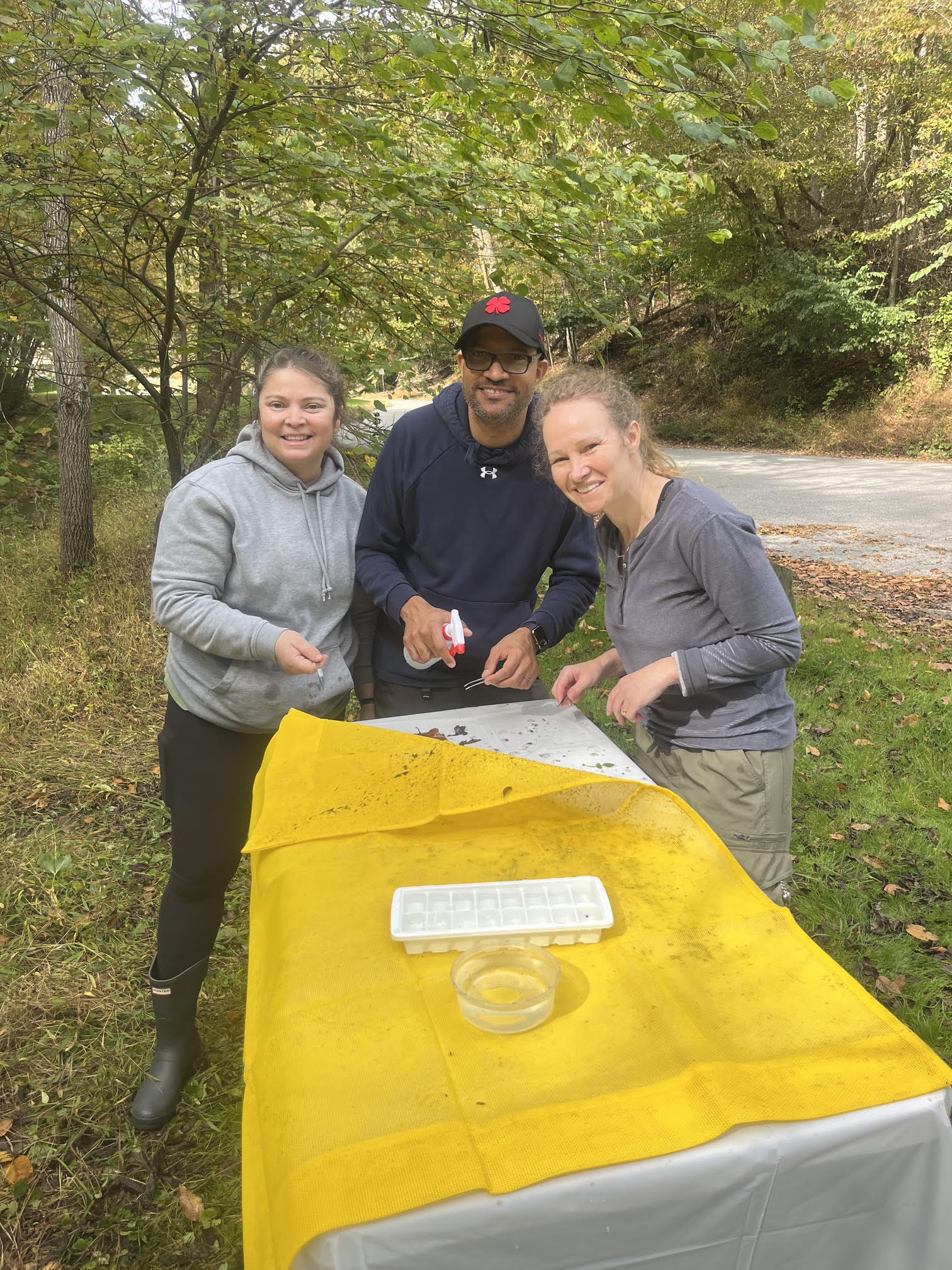
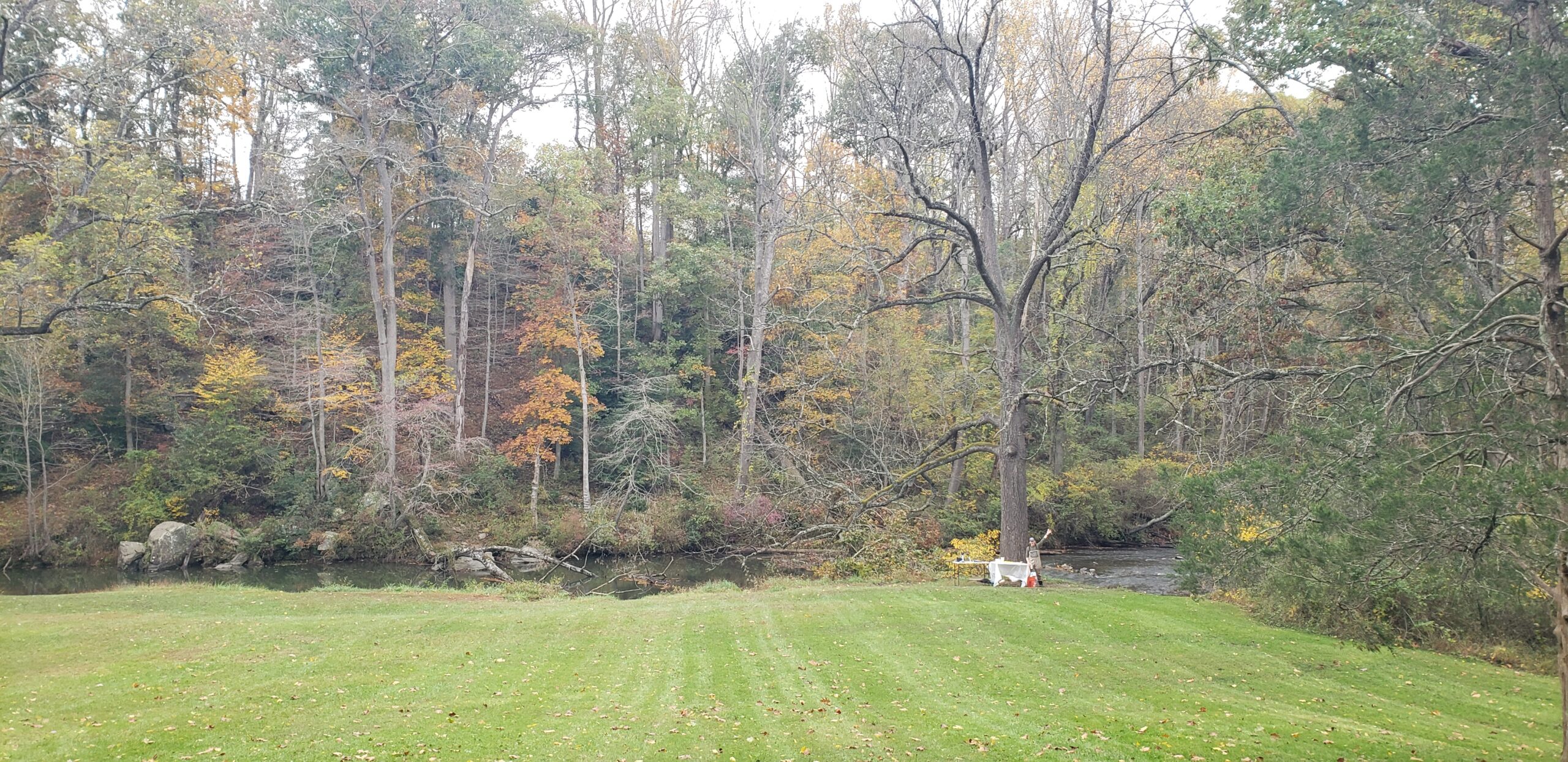
Our second monitoring station was on the main stem of Big Gunpowder Falls proper where we monitored just downstream of York Road at the lovely State Park area known colloquially as Hillbilly Beach. Here we were met by volunteer Riley Johnson who has been eager to join us for some time and finally found the right opportunity.
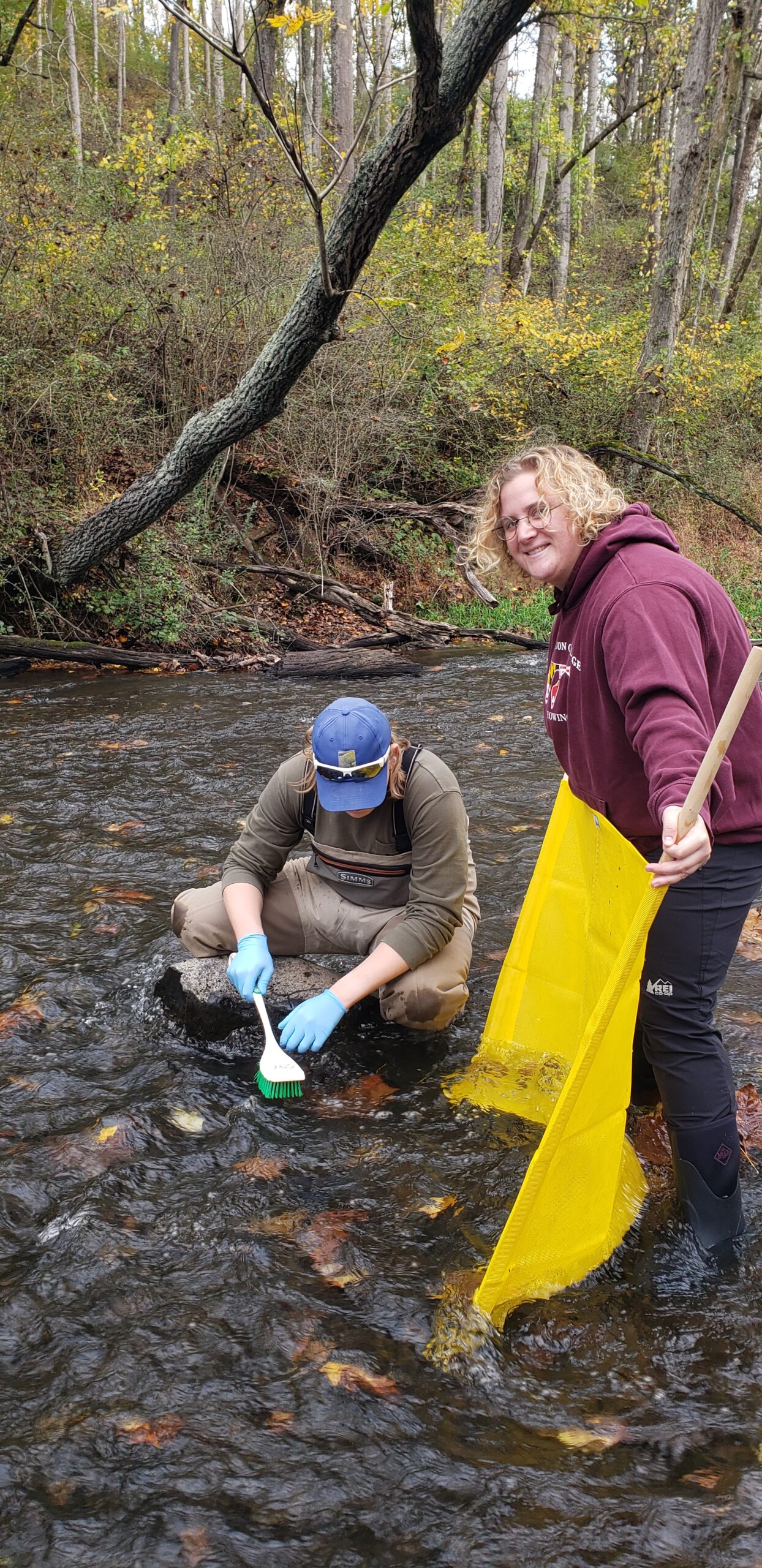
At both locations we observed the Rocky Bottom protocol for the Chesapeake Region of Save Our Streams. To do this we deployed our kick net for twenty seconds to a minute, splitting our time 3 : 1 between scrubbing rocks with a brush and digging around in the mud with the brush handle. It took us three nets on Bush Cabin Run and just two on Big Falls to collect all of the bugs required for reporting data: no less than 200 individuals per station in order to obtain a representative sample.
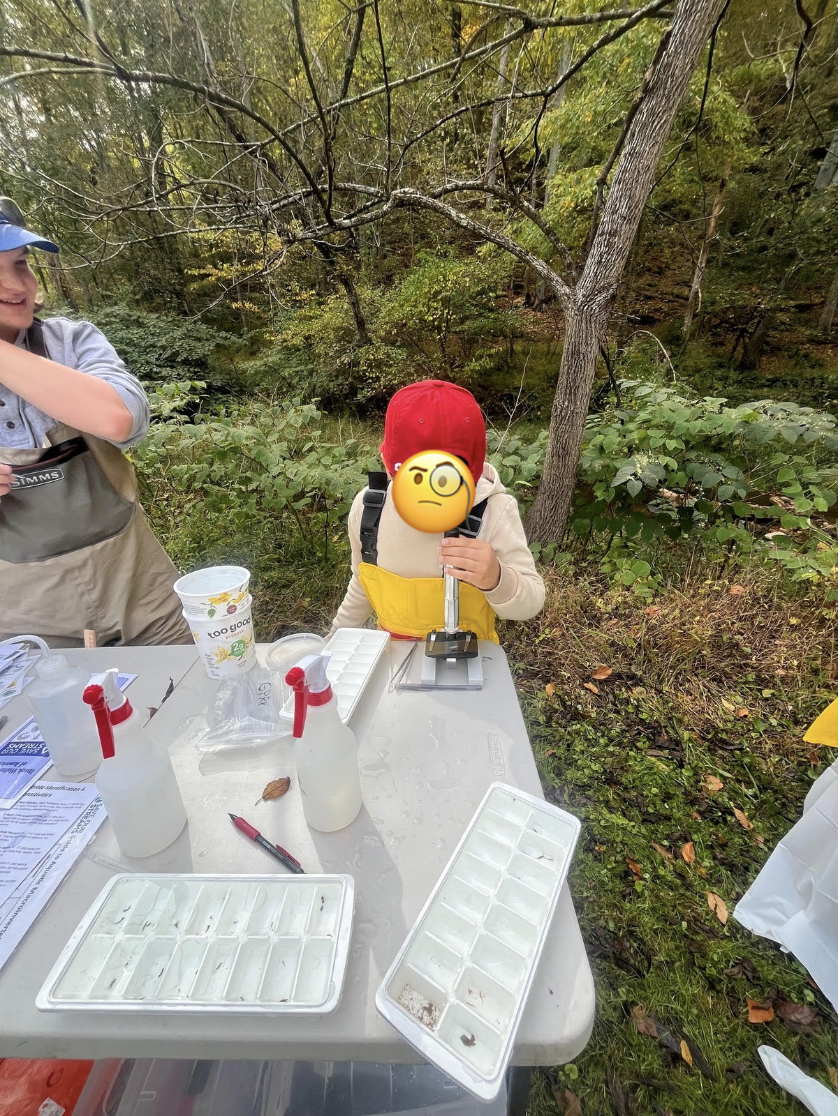
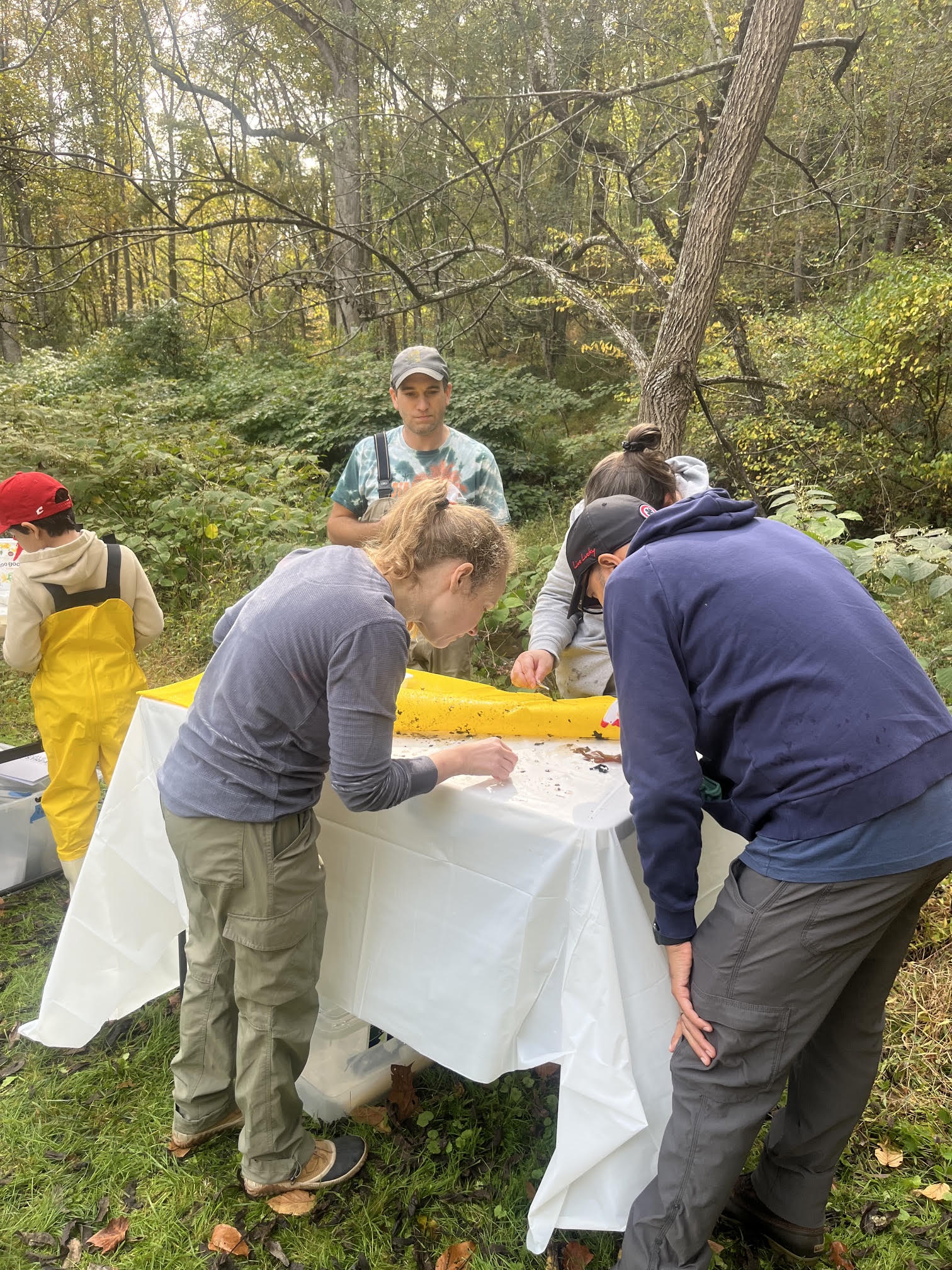
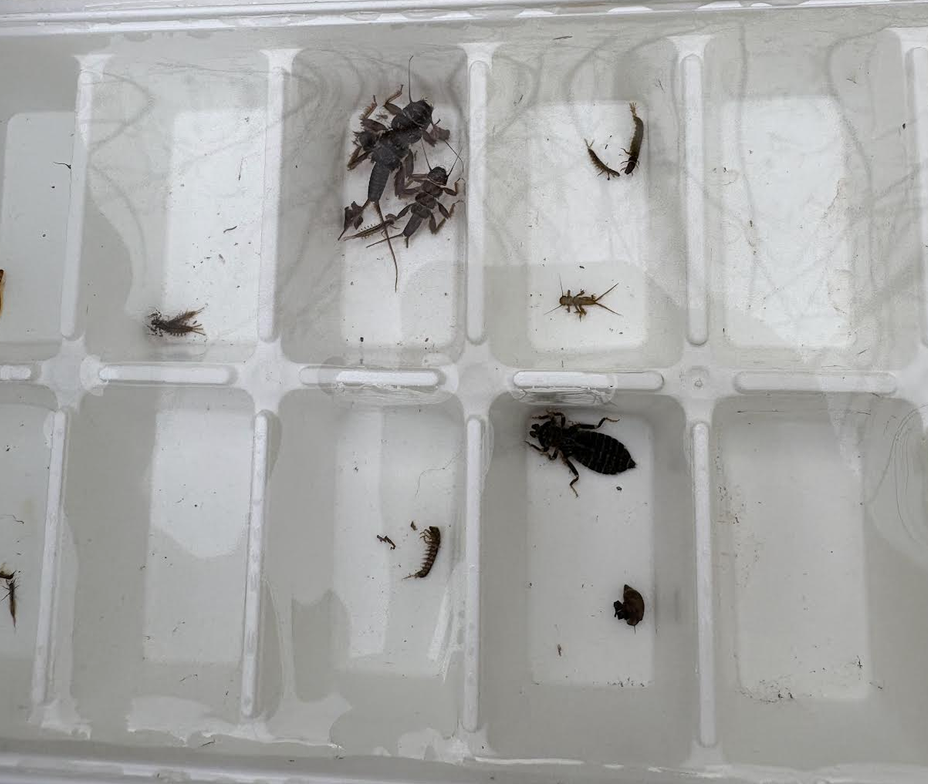
After we netted our samples, we spread the net on a table for the real work to begin: collecting individual macroinvertebrates with tweezers or a pipette, roughly categorizing them in an ice cube tray, sliding them under the microscope to identify which family of critters they belonged to, and finally counting up the total number of each type. All critters are released back into the same riffle from whence they came, as unharmed as possible.
Benthic macroinvertebrates are a large category of animal that live on the stream bottom (Benthic). They are relatively large (Macro) and thus can be seen with the naked eye. Invertebrates (lacking spines) fall into a few narrower categories: insects, crustaceans, molluscs, and a few others like aquatic worms and planarians (flatworms).
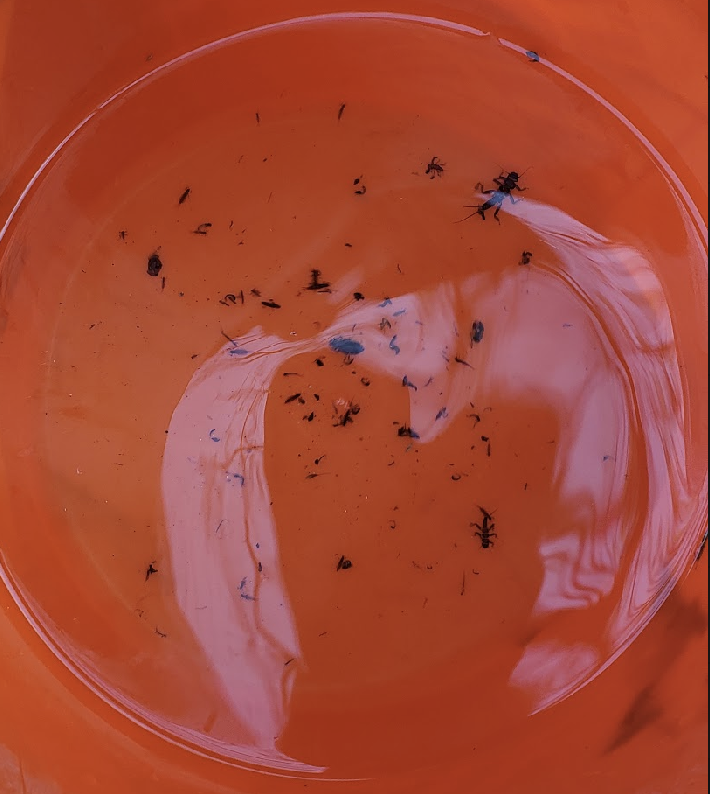
These critters live in the same stream riffle for months or years at a time, so they are a good static indicator of stream health, as opposed to a fish for example, which can come and go as water quality changes. The “macros” are stuck there until they grow into their adult forms like mayflies or dragonflies (or until they get eaten by a trout). Invertebrates like snails, clams, crayfish, and riffle beetles spend their entire lives in the water. Since we know which types of invertebrates are tolerant or sensitive to pollution, we can use the ratio of “good” bugs to “bad” bugs as a measure of water quality.
At Bush Cabin Run, we found many riffle beetles, caddisflies, stone flies, and mayflies, and relatively few lunged snails, leeches, crayfish, flatworms, black flies, and midges. Our final tally resulted in good news for Bush Cabin Run: it scored as high as possible using the VSOS stream health score index: Acceptable Ecological Conditions. On Big Gunpowder Falls, however, we were unable to determine the stream health from this sample: it fell into the middle ground called the “ecological grey-zone” which means we weren’t able to classify it as either acceptable or unacceptable based on the sample results.
While these two samples are just the start of our Benthic Macroinvertebrate Monitoring program, already we can see the difference between a pristine stream flowing through parkland, and a river impaired by runnoff from road and freeway crossings. Next year, we’ll go back to the same spots in the spring and the fall to gather more longitudinal and comparative data points.
If you’re interested in volunteering with Gunpowder RIVERKEEPER®, fill out the form to let us know and to hear about upcoming opportunities.
Check out the Creek Critters app from Nature Forward for android or apple if you want to identify bugs on your own and the IWLA website if you want to become certified to lead your own monitoring sessions.

Stay up to date on the Gunpowder watershed by following us on social media or subscribing to our quarterly newsletter.
If you don’t have the time volunteer, consider making a donation to Gunpowder RIVERKEEPER® instead. Each hour of volunteering is worth $35 to the non-profit.
Thanks to everyone who came out to help us monitor macroinvertebrates: we couldn’t have done it without you!