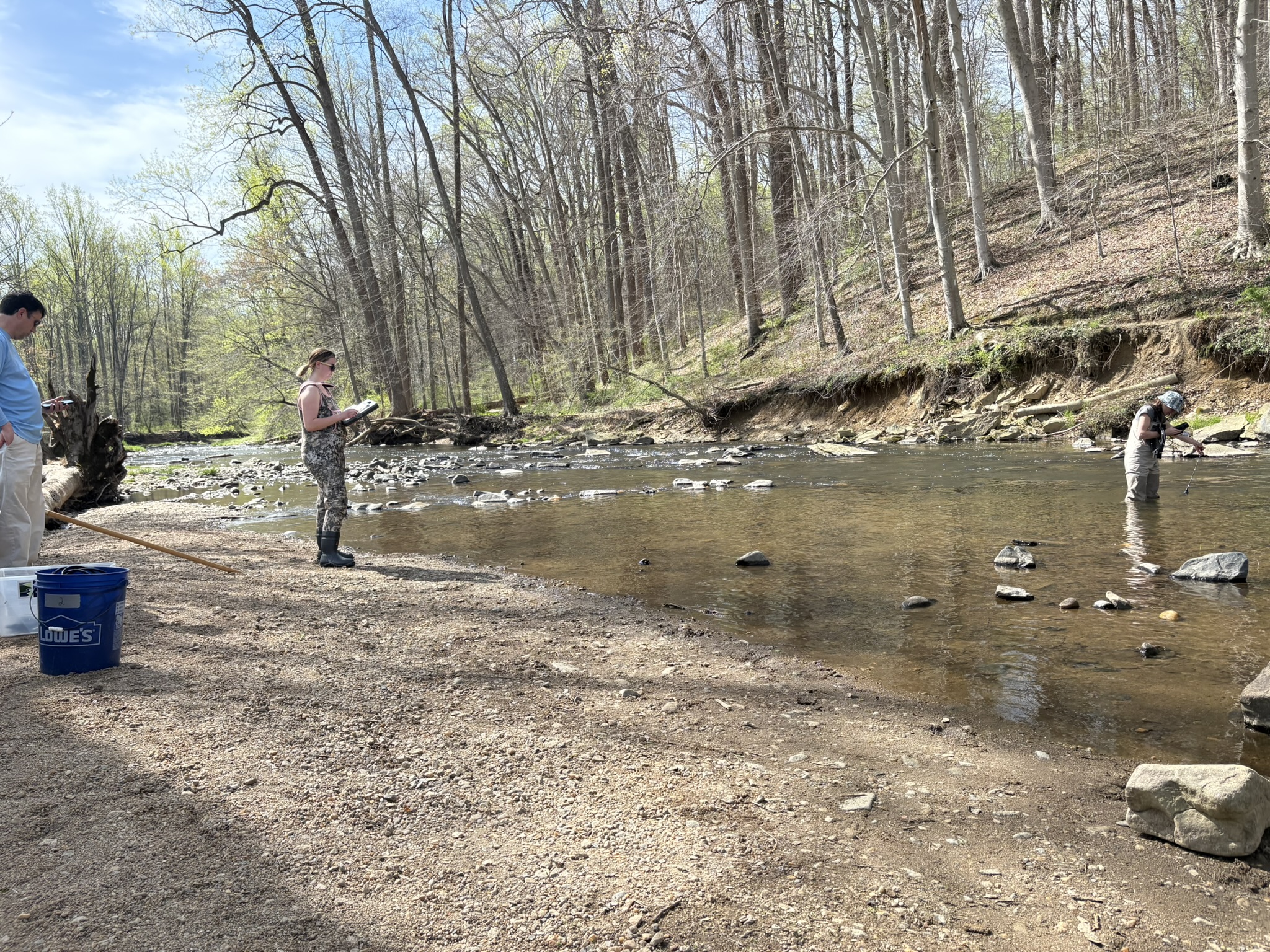
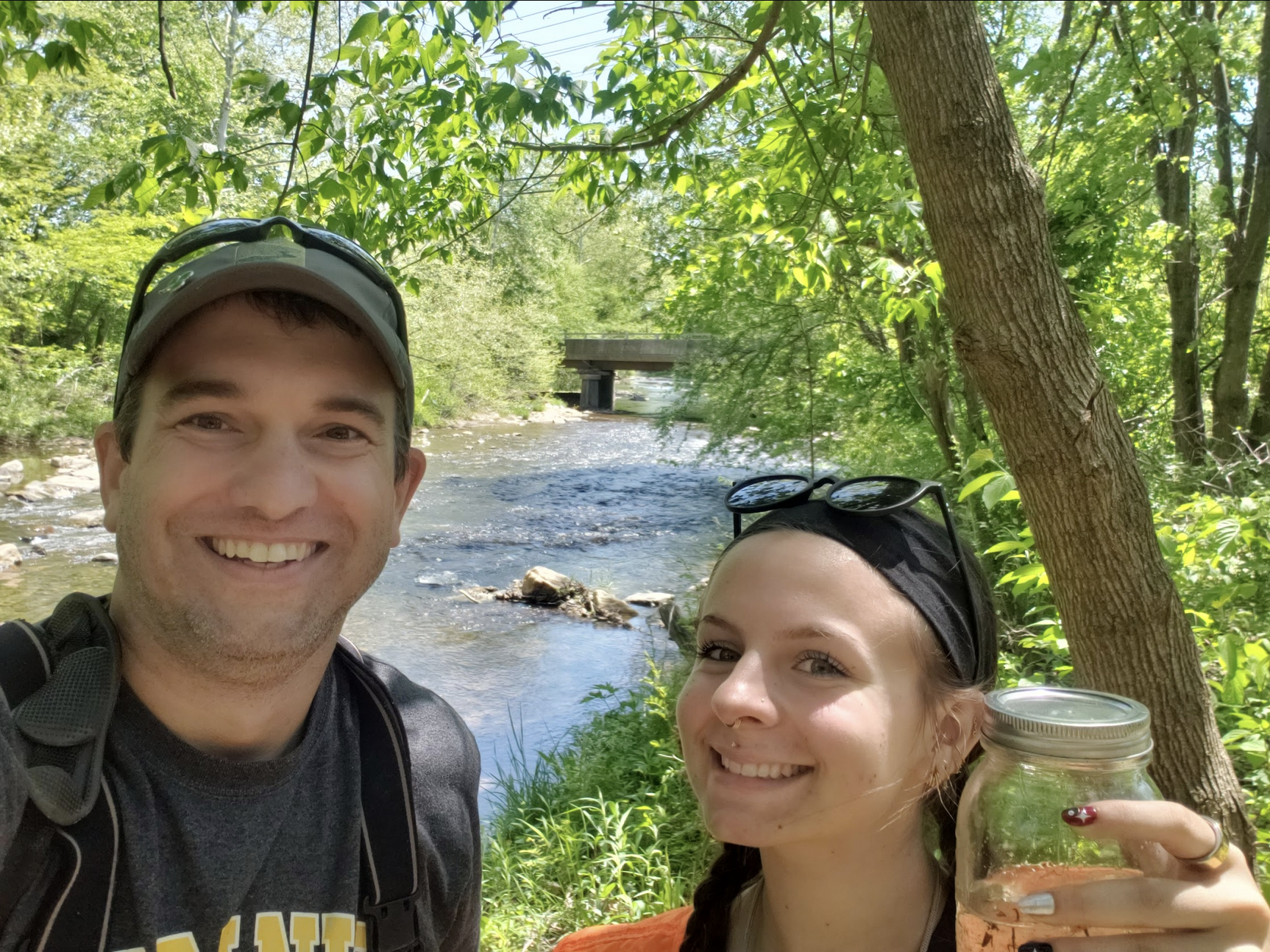
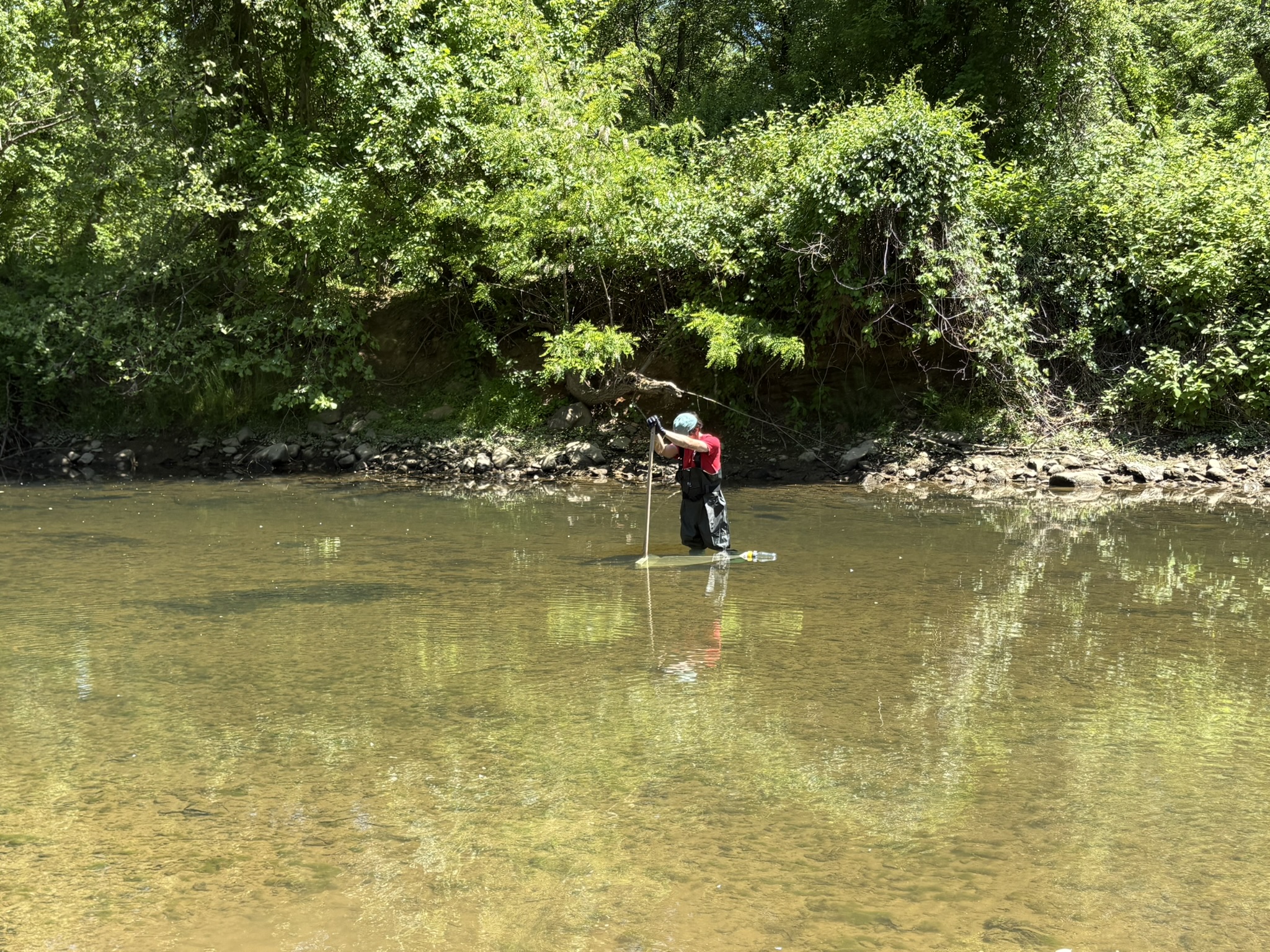
Thanks to Maryland Department of Natural Resources (MDNR) Fish Biologists Jeffrey Horne, Marek Topolski, Marissa Ponte, and Shannon Moorhead and all of the volunteers who came out to help us collect samples and data to inform Fisheries’ study of the spawning habits of anadromous fish (those that swim upriver from saltwater to freshwater for the purpose of breeding) in the Gunpowder watershed.

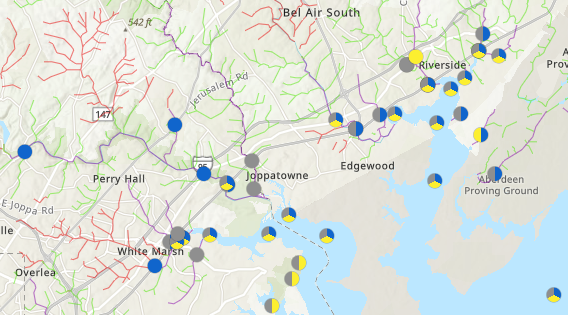
From the beginning of March through the middle of May, we sampled weekly at ten sites: four on Big Gunpowder Falls, two on Little Gunpowder Falls, and one each on the Bush River tributaries: Winters Run, Haha Branch, Bynum Run, and Cranberry Run. Each of these sites was selected by Fisheries as sites that have been monitored historically for anadromous fish spawning. We had planned to continue monitoring until the end of May, but water temperatures rose past the point that fish would be realistically spawning. The first week of monitoring returned water temperatures just above freezing in the single digits Celsius, but we were up to a balmy 16° (60° F) by May 12th.
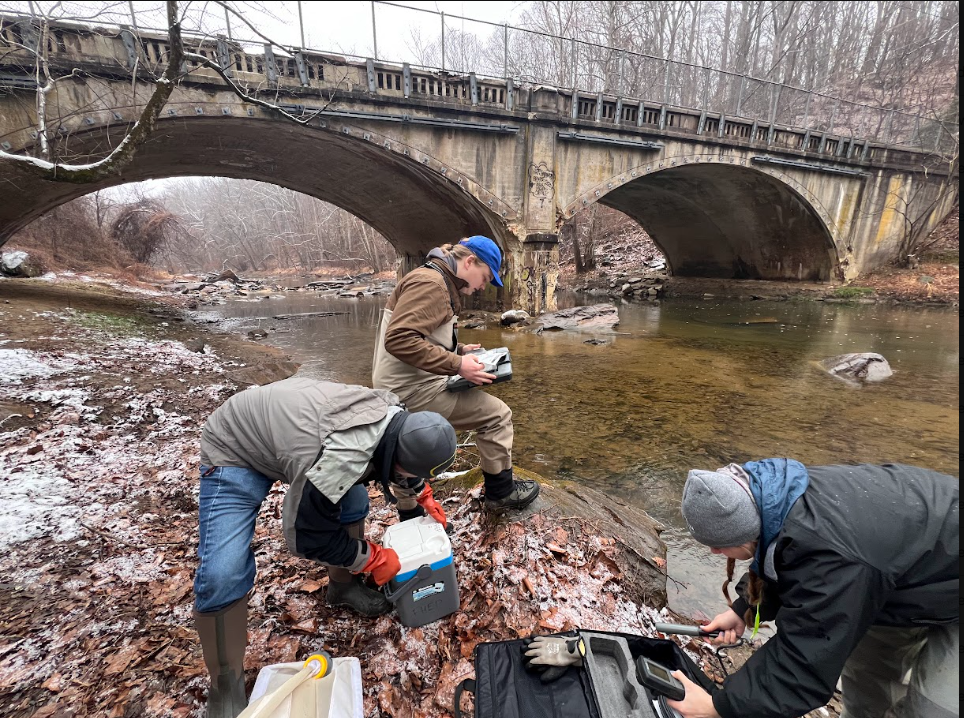
Water temperature is a key indicator of when fish will be spawning, but the other question was “where?” Data across our ten sites will be able to show which tributaries each species of fish is using to spawn. The other data we collected: Dissolved Oxygen (mg/L) and the Conductivity of the water are indicators of water quality to support fish life. If the dissolved oxygen level in the water is too low, fish will not be able to respirate. High conductivity indicates dissolved solids, especially road salts, that are not conducive to aquatic life.
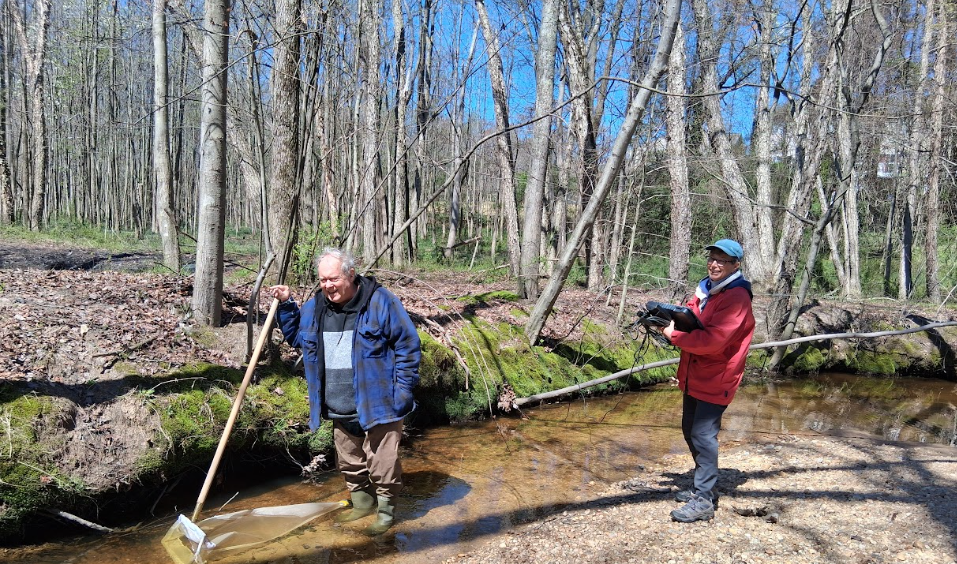
During a preliminary inspection, herring roe were observed in samples from the Big Gunpowder in the first week of April, and herring larvae were observed the following week also in the Big Gunpowder. For the rest of the analysis, the samples have been sent to Fisheries for the samples to be dyed: highlighting the eggs and larvae in pink for easier identification and counting.
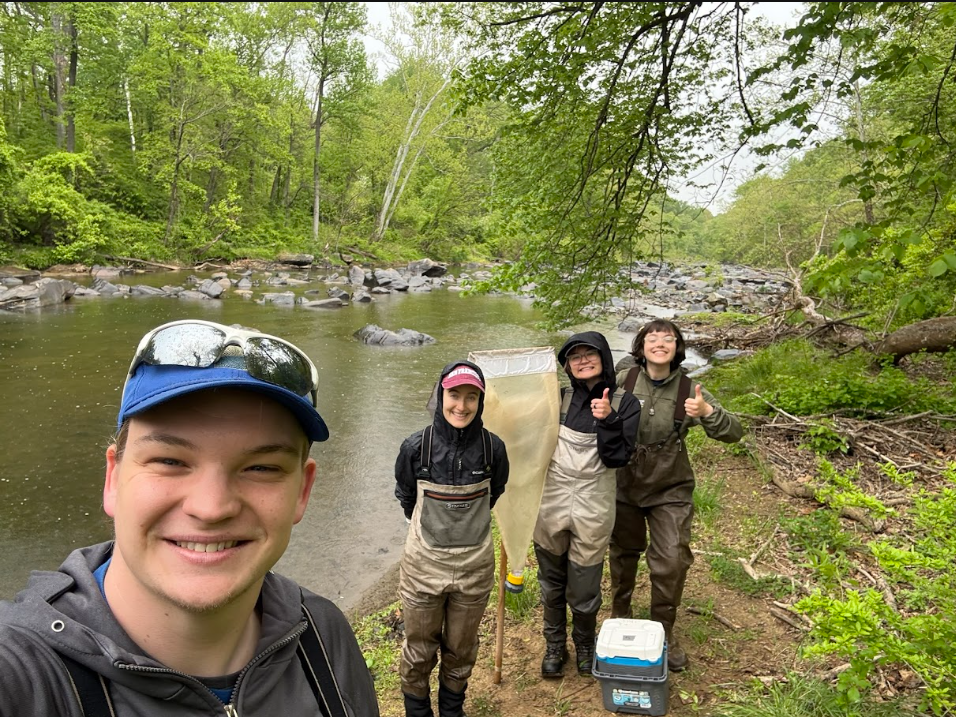
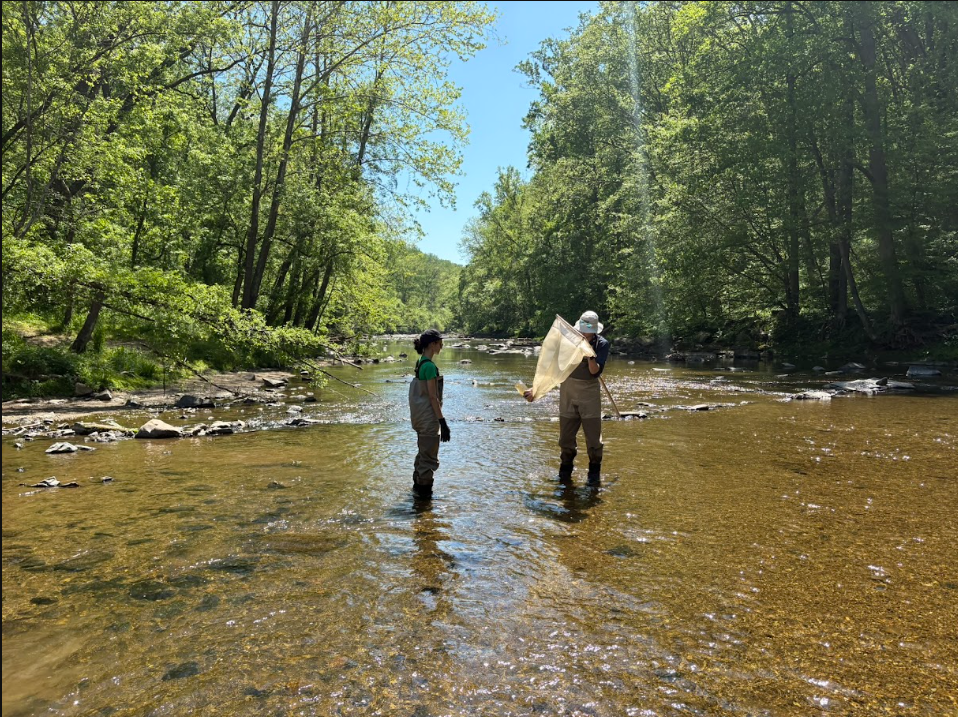
Once the samples are processed, Fisheries will be able to compare the data with the historical dataset to see how spawning corresponds to historical locations. These sites were chosen also due to their proximity to road crossings and bridges. This not only makes the sites easier to access, it also allows Fisheries to examine the human impact on these sections of rivers and streams.
Overall, this experience was very exciting for most, if not all involved. Locals on the Bush River got to hang out with each other and RIVERKEEPER staff as we took a tour of the Harford County streams, shared stories, and learned from each others’ experiences. Chesapeake Climate and Conservation Corps Members got first-hand monitoring experience in the field and were able to meet with other Corps members, our volunteers, our staff, and fish biologists to pick their brains on their areas of expertise. Gunpowder RIVERKEEPER® racked up the hours donated in-kind by volunteers: three hours a week might not seem like much, but multiplied by 2-4 per volunteer each week and by ten weeks, and at a value of $37 an hour, we’re talking about over three thousand dollars worth of hours donated. And of course, Fisheries was able to collect the data and samples necessary for this monitoring through the expanded capacity we provided.
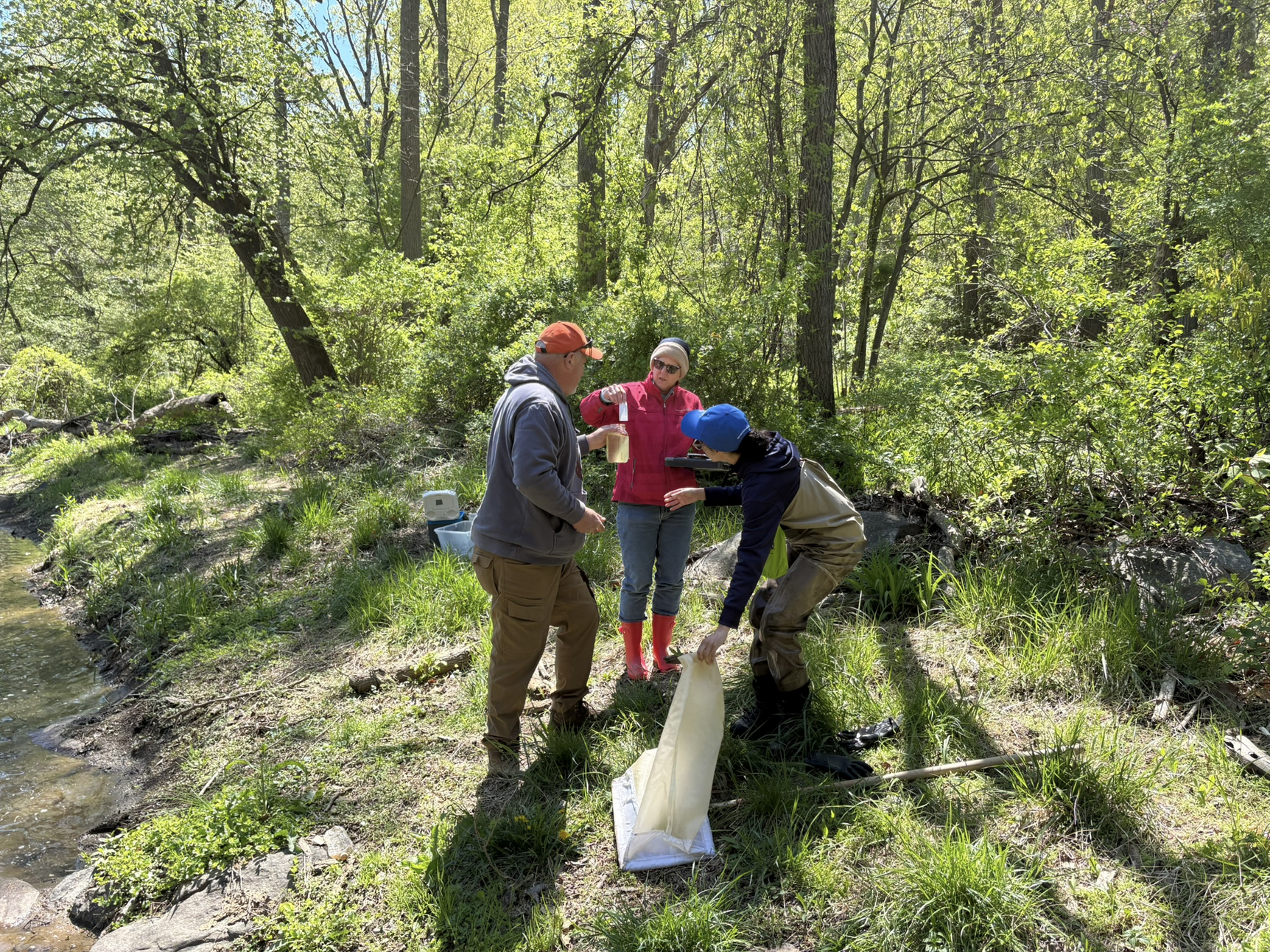
Thanks again to our volunteers who came out “Perching” and “Livestreaming:” Bill Temmink, Steve Duker, Julie Krastel, Kevin Roeder, Pamela Price, Janet Jastremski, Phil and Sharon Bildstein, Annie Gao, and all of the CCCC Members who came out for a site visit. Be sure to subscribe to our newsletter, follow us on social media, and check back on our website for more exciting opportunities or sign up to volunteer on our form here.